
Websites for small businesses that need to win work.
Small business websites we have built.
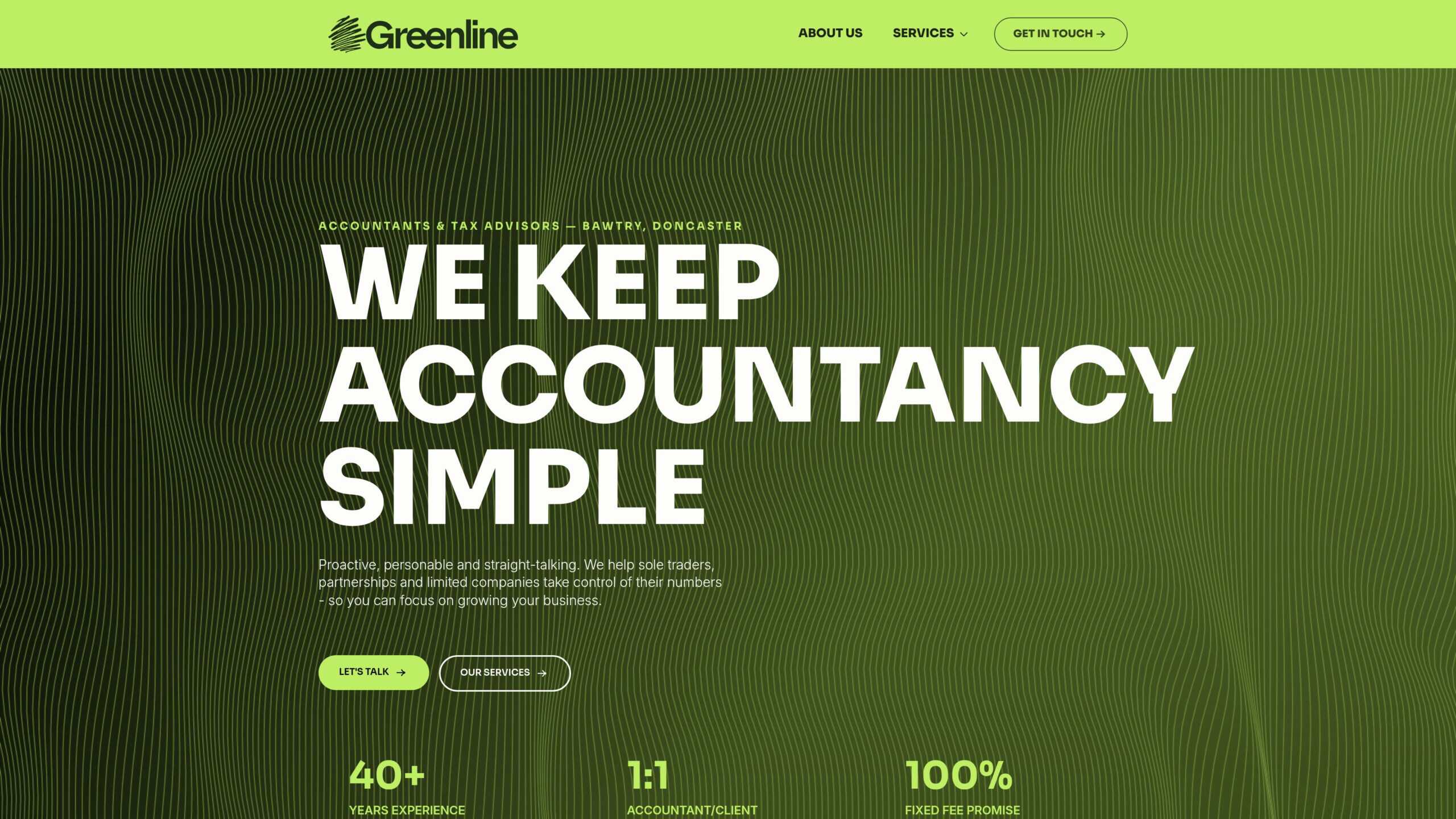
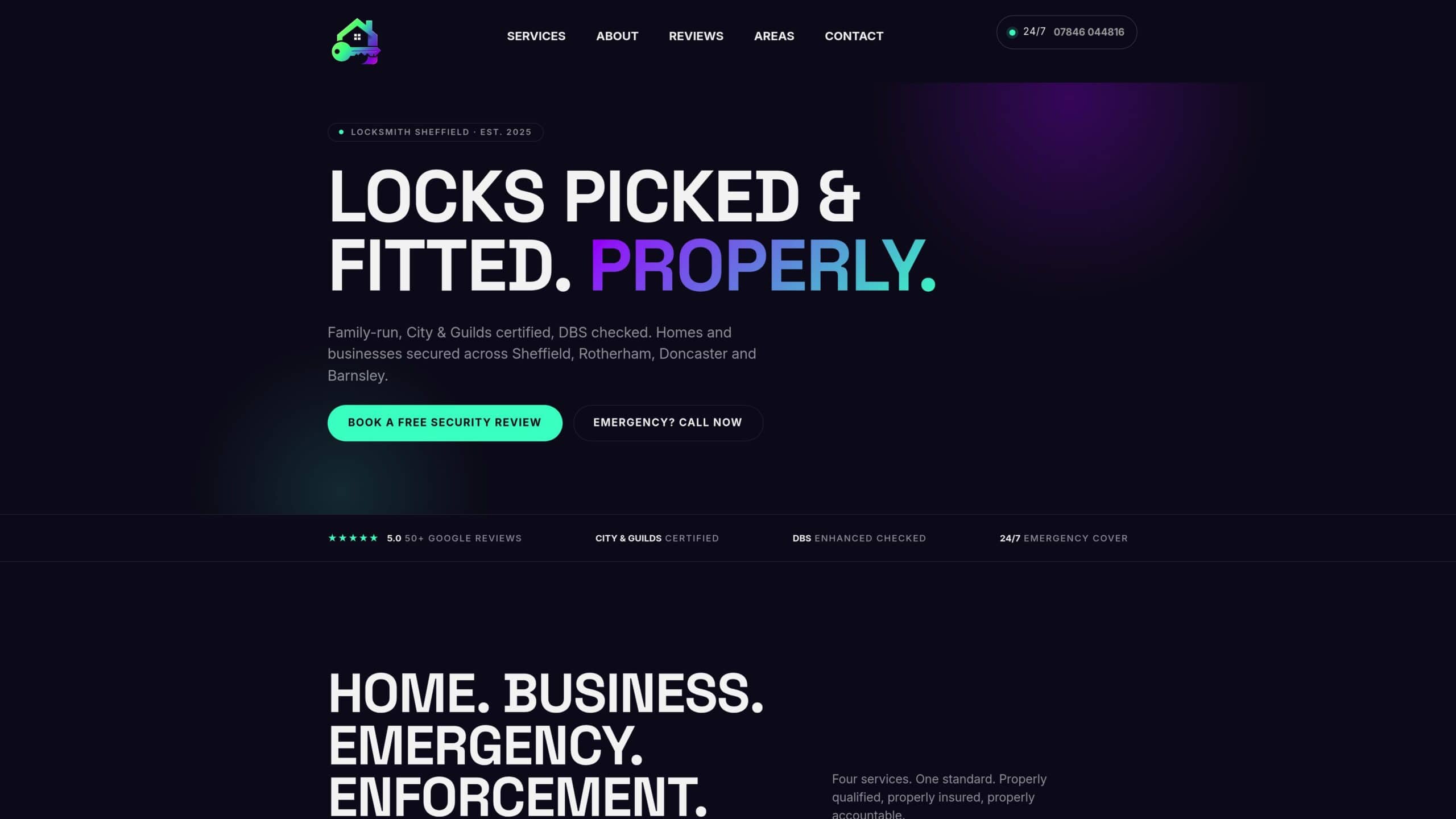

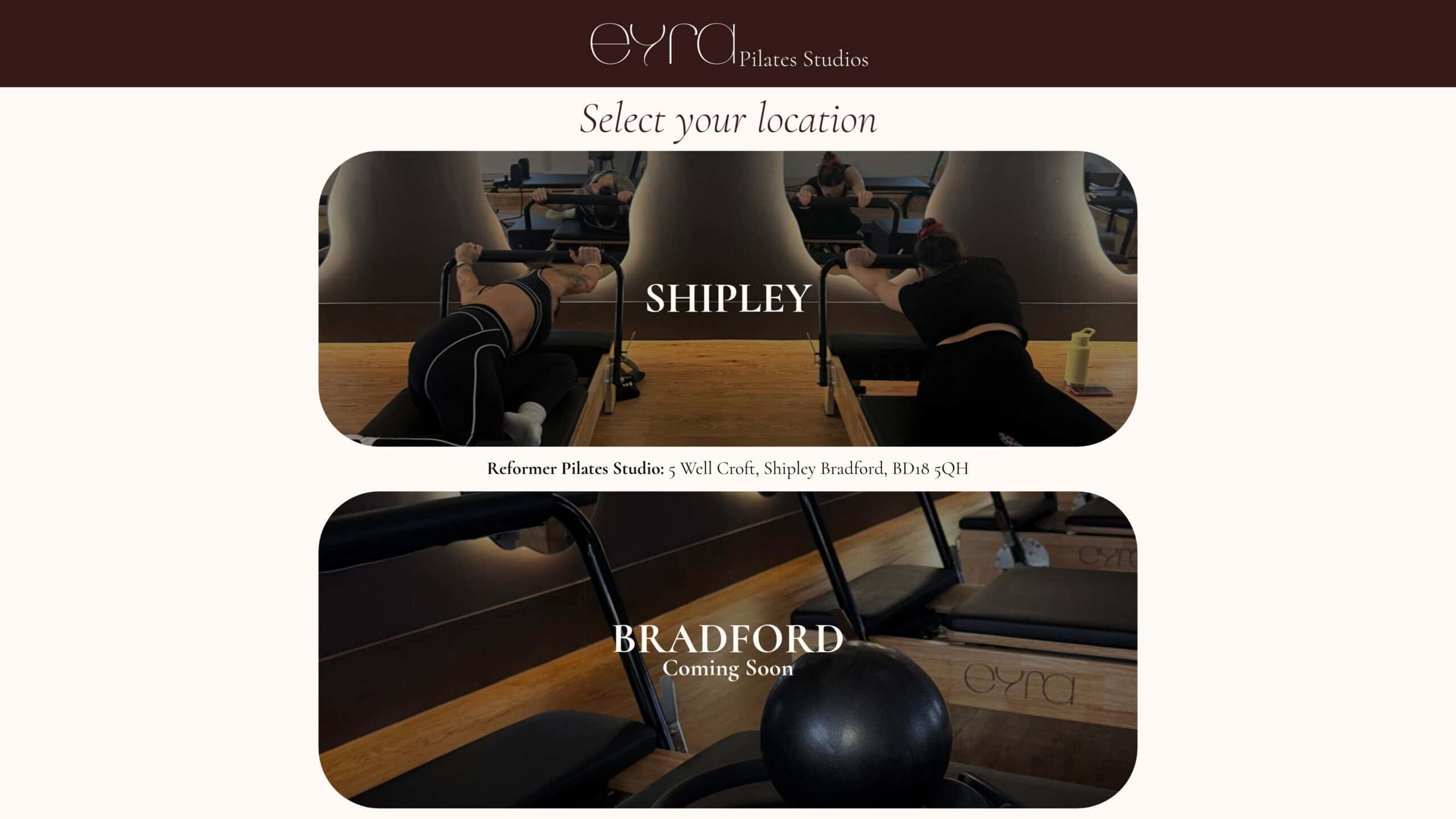
What web design for small business needs to cover.
Six things, done properly, will outperform twenty features nobody uses. Most of what gets sold to small businesses belongs in the second category.
A reason to choose you
What you do, who for, and why somebody would pick you over the firm three miles away. Most small business sites never answer the third one, and it is the only one that decides anything.
Being found
Pages for the services you actually sell and the places you actually work, structured so Google can tell what you do rather than having to guess from a homepage.
A way to get in touch
A form that asks only what you need, a number that can be tapped, and both of them visible without scrolling. On a phone, in a hurry, this is the part that matters most.
Proof you are real
Reviews, accreditations, photographs of your own work and the names of people you have done it for. Small businesses win on trust and lose on looking anonymous.
Speed
Loading before somebody gives up. It is unglamorous, it is measurable, and it is the difference between an enquiry and a back button on a train.
Being able to change it
Adding a service, updating prices, putting up a photograph from last week. Things you should be able to do on a Tuesday without ringing anybody or paying for an hour.
What you probably don't need yet.
All of these are useful at the right size. Sold to a business that is not there yet, they are cost and complication with nothing on the other side.
A custom mobile app.
Your website is your mobile presence. An app only earns its keep when you have customers coming back often enough to install something, and small businesses almost never do.
A blog you will not write.
Content works, but only if somebody actually produces it. A blog with three posts from the launch month is worse than no blog, because it dates the whole site.
Live chat nobody is watching.
An unanswered chat window is worse than no chat window. If there is nobody to answer it within a few minutes, a phone number and a form will serve you better.
Animation on everything.
Movement can help you notice the right thing. Applied to every element on the page it slows the site down, and slow is the one problem your customers definitely notice.
An online shop, before anyone has asked.
Selling online is a real project with real running costs. If nobody has yet asked to buy from you online, it is cheaper to find that out with a phone number than with a checkout.
Build it yourself, or have it built?
Build it yourself
Squarespace or Wix. For a few hundred pounds you will be online this week, and that is a better use of the money than half an agency project. Come back when the site has a job to do that it is not doing.
Already have a website?
Most small businesses do, and it is usually the same story. Built once, a few years ago, by someone who has since stopped answering. Replacing it is less disruptive than it sounds.
- You will own it
The site, the code, the hosting and the domain end up in your name. If you ever want to leave us, you take it with you.
- Content and photographs
Everything worth keeping comes across. Nobody has to write the About page again.
- URLs and rankings
Old addresses redirect to their new homes, planned before the move, so whatever visibility you have earned follows you.
- Your email is untouched
Moving a website does not have to touch your email, and we do not touch it.
- Going live
We switch over out of hours and watch it happen, rather than pressing a button and hoping.
What it costs, and how we work.
The number matters more to a small business than to anyone else we work with, so here it is without the runaround.
From £2,500
- A fixed price for a defined scope, agreed before we start. Not an hourly rate that drifts, and not a number that changes once you are committed.
- That covers a custom designed, custom built site of roughly five to twenty pages. Booking, integrations or an online shop sit above it.
- Or pay monthly from £144 with nothing up front, and the site is yours to own outright after thirty-six months.
A conversation, then a number
- We start with what the site has to bring in, because a website that costs £2,500 and wins one job a month is not really an expense.
- Then design, then build, then testing with real content before anything goes live.
- You deal with the people doing the work. No account manager, and nothing is sent offshore.
We are still here
- Hosting, updates, monitoring and backups from £49 a month, and someone to ring who already knows your site.
- Every business in our portfolio is still a client. For a small business that matters more than the build itself, because the alternative is the developer who stops replying.
Questions people actually ask.
Ours start at £2,500 for a custom designed, custom built site. Below about £1,000 anywhere you are generally buying a template with your logo dropped into it, which is fine if that is what you want but is not the same product. Above £10,000 for a small business site, ask hard what the extra is buying.
Yes, from £144 a month with nothing up front, and the site is yours outright after thirty-six months. It exists because the up-front cost is the obstacle for a lot of small businesses, not the project itself.
No, though the best sites are the ones where the owner told us how they actually explain the job to a customer. We do the writing and structuring. What we need from you is half an hour of honesty about what people ask you and why they pick you.
Six to ten weeks for most small business sites. The design is rarely the slow part. Getting content, photographs and decisions out of a business that is busy running itself is what sets the pace.
It grows with you, because it is built on WordPress and you own it. One of our clients launched, grew, and came back for a bigger rebuild two years later. That is a good outcome, not a failed first build.