
No products in the basket.

Web Design Team Guide: Strategies for Success in 2026
Discover how to build and lead a successful web design…

The ecommerce landscape is transforming at an unprecedented pace, and 2025 promises even fiercer competition for online businesses. Success now hinges on the expertise of a skilled ecommerce website developer, as shoppers expect seamless experiences, personalisation, and flawless security.
This guide is your comprehensive blueprint to mastering the ecommerce website developer role in 2025. Discover the essential skills, how to choose the right platform, principles of design and UX, robust security practices, performance optimisation, SEO strategies, and the trends shaping the future.
Ready to elevate your career or business? Dive in and unlock actionable steps to thrive in the evolving world of ecommerce.
The ecommerce landscape in 2025 is rapidly evolving, presenting both challenges and opportunities for every ecommerce website developer. Keeping up with shifting trends, consumer demands, and platform innovations is essential to remain competitive and deliver outstanding results for clients.

Global ecommerce sales are projected to surpass £7 trillion by 2025, according to Global eCommerce Sales Projections 2025. This explosive growth is fuelled by several key trends. Over 70 percent of all ecommerce traffic is expected to come from mobile devices, making mobile commerce a dominant force.
Niche and direct-to-consumer (D2C) brands are thriving, as consumers seek personalisation and unique product offerings. Cross-border ecommerce is also expanding, with more businesses targeting international customers. For any ecommerce website developer, understanding these trends is vital for building scalable and future-ready solutions.
Today’s consumers expect seamless omnichannel experiences, whether they shop on mobile, desktop, or in physical stores. Fast page loads and a frictionless checkout process are now non-negotiable requirements for online shoppers.
There is a growing preference for ethical, sustainable, and locally-sourced brands. Customers are increasingly mindful of their impact and want transparency from the brands they support. For the ecommerce website developer, designing sites that cater to these expectations is crucial for driving customer loyalty and conversions.
The modern ecommerce website developer is much more than a coder. Developers have become strategic partners, working closely with business owners to influence conversion rates and customer retention through smart technical decisions.
For instance, a leading retailer saw a significant uplift in sales after investing in a complete site redesign and enhanced functionality. By focusing on both design and backend performance, the ecommerce website developer helped transform the user experience, resulting in higher engagement and repeat purchases.
Shopify, WooCommerce, Magento, and BigCommerce continue to dominate the market, each offering unique benefits. According to recent data, Shopify leads in ease of use and global reach, while WooCommerce is preferred for flexibility and customisation. Magento remains a top choice for large-scale, complex projects.
Headless commerce and composable architectures are on the rise, allowing developers to create tailored ecommerce experiences. Leading businesses are now selecting platforms based on scalability, integration options, and the ability to deliver outstanding customer journeys. Every ecommerce website developer must stay updated on these tools to recommend the best fit for each project.
In the ever-evolving world of online retail, an ecommerce website developer needs a diverse skill set to stay ahead. The landscape in 2025 is fast-moving, demanding proficiency in technical, creative, and collaborative areas. Let us break down the essential skills and tools every professional should master.
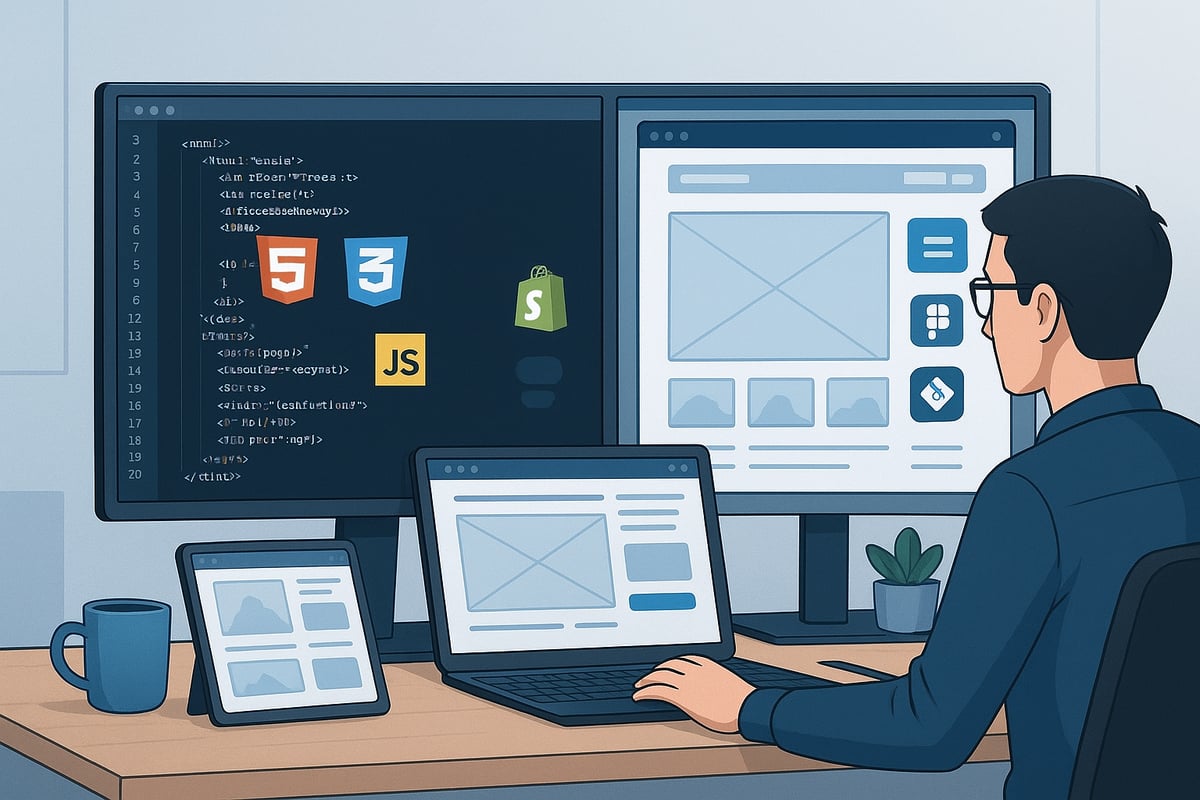
To excel as an ecommerce website developer, technical mastery is non-negotiable. Developers must be fluent in HTML5, CSS3, and JavaScript (ES6+) to create robust and interactive storefronts. Experience with backend languages such as PHP, Node.js, and Python offers flexibility for custom solutions. Understanding API integration and headless CMS architecture is increasingly vital as businesses demand scalability and seamless connections between systems.
Here is a quick skillset summary:
A strong technical foundation ensures an ecommerce website developer can tackle complex projects confidently.
Selecting the right platform is crucial for any ecommerce website developer. Leading options like WooCommerce, Shopify, and Magento each offer unique strengths in scalability, flexibility, and customisation. For example, WooCommerce provides open-source adaptability, making it ideal for local businesses wanting tailored solutions. Shopify is valued for ease of use and speed to market, while Magento supports enterprise-level scaling.
Many developers specialise in one or more platforms to deliver the best results. For those focusing on WooCommerce, a WooCommerce website agency expertise can offer deep insights into multisite, integration, and bespoke features.
Evaluating project needs against platform capabilities is a key responsibility for any ecommerce website developer.
A successful ecommerce website developer must prioritise user experience and design. Mobile-first thinking is essential, as most shoppers visit sites on their phones or tablets. Responsive layouts ensure a seamless experience across devices. Conversion-focused UX involves clear calls-to-action, intuitive navigation, and visible trust signals, all of which help guide users towards purchase.
Accessibility is a must, not an afterthought. Inclusive design opens your store to all users, ensuring compliance and boosting reputation. By combining these principles, an ecommerce website developer maximises engagement and sales.
Efficiency matters for every ecommerce website developer, particularly on large or complex projects. Version control systems like Git help manage code changes and enable teamwork. CI/CD pipelines streamline deployments, reducing errors and saving time. Local development environments replicate live sites for safe testing.
Project management software such as Jira, Trello, or Asana keeps everyone aligned, while design tools like Figma and Adobe XD enable real-time collaboration on layouts and prototypes. Using the right mix of tools empowers an ecommerce website developer to deliver polished results quickly.
The digital commerce world never stands still. An ecommerce website developer must commit to ongoing learning to stay competitive. Regularly upskilling through online courses, reading industry blogs, and joining developer communities is essential. In fact, over 60 percent of developers report upskilling every year.
Recommended resources include:
By investing in continuous learning, an ecommerce website developer ensures they remain adaptable and ready for new challenges.
Building a successful online store in 2025 requires a structured, strategic approach. Every ecommerce website developer must master each phase of the process for optimal results. Let us break down the journey, from initial planning to ongoing support, so you can deliver high-converting, future-proof ecommerce solutions.
The journey starts with understanding client goals and market context. As an ecommerce website developer, you should conduct detailed stakeholder interviews to capture business objectives and user needs. Competitive analysis reveals industry benchmarks and differentiators.
Use findings to define project scope, timelines, and measurable KPIs. Documenting these early decisions ensures alignment and prevents costly scope creep. A clear roadmap at this stage sets the foundation for a smooth build and successful launch.
Choosing the right tech stack is crucial. An ecommerce website developer must evaluate if a Software as a Service (SaaS), open-source, or headless solution best fits the client’s business model. Consider scalability, customisation, and budget.
For instance, a B2B supplier might select Magento for its advanced features, while a local shop could benefit from Shopify’s simplicity. Map out the site architecture, keeping future integrations and growth in mind to avoid bottlenecks later in development.
Effective design is more than aesthetics. The ecommerce website developer needs to create wireframes and prototypes that align with the brand’s voice and values. Prioritise mobile-first layouts and accessible navigation.
Incorporate elements that build trust and drive conversions, such as customer reviews, guarantees, and social proof. Testing design concepts with users can uncover friction points and improve the overall shopping experience before build begins.
When coding, focus on modularity and reusability. An ecommerce website developer should adhere to established coding standards, maintain thorough documentation, and implement robust error handling. Integrate payment gateways, shipping APIs, and other third-party services securely.
For those seeking tailored solutions, Custom ecommerce web development services offer bespoke features to meet unique business requirements. Collaborate closely with designers and stakeholders, ensuring the final product matches the original vision.
Testing is non-negotiable. The ecommerce website developer must use both automated and manual protocols to catch bugs early. Validate compatibility across browsers and devices, as shoppers will access the site from various platforms.
Security testing is vital, including PCI compliance and vulnerability scans. A comprehensive QA process helps ensure a seamless user journey and protects both business and customer data.
Before launch, the ecommerce website developer should run a pre-launch checklist: verify SEO settings, analytics tracking, and create backups. Use a staging environment to test deployment, ensuring a smooth transition from development to live site.
Monitor site performance closely during go-live. Be prepared for rapid troubleshooting to address any issues that might arise, minimising downtime and maintaining customer trust.
Post-launch, the ecommerce website developer’s role shifts to proactive support. Schedule regular updates, backups, and security patches to safeguard the site. Use monitoring tools to track performance and resolve issues promptly.
Provide clients with documentation and training, empowering them to manage content and basic functionality. Ongoing maintenance is essential for sustained growth and adapting to new ecommerce trends.
Partnering with a local agency like Pixelish gives businesses access to expert ecommerce website developer skills and regional market insight. Pixelish specialises in custom WooCommerce builds, multisite solutions, and comprehensive WordPress support.

In one case, Pixelish helped a Doncaster retailer scale online sales by 200% in just 12 months. Their approach emphasises transparent pricing, quick turnaround, and dedicated post-launch support, making them a trusted partner for long-term ecommerce success.
Optimisation is at the heart of sustainable growth for any ecommerce website developer. In 2025, delivering a seamless, fast, and secure shopping experience is not just an advantage, it is essential for survival in a competitive market. Let us explore the core areas every ecommerce website developer must master for top performance, robust security, and strong SEO.

Site speed is a critical factor for every ecommerce website developer. A delay of just one second in load time can result in a 7 percent drop in conversions, directly impacting revenue. To ensure sites remain lightning-fast, developers should focus on:
cache-controlTools such as Google PageSpeed Insights and GTmetrix help identify performance bottlenecks. Regular audits allow the ecommerce website developer to stay ahead of user expectations and search engine requirements.
Security is non-negotiable for any ecommerce website developer. With rising threats, protecting customer data and transactions should be a top priority. Essentials include:
A strong security posture builds trust and prevents costly breaches. For a comprehensive checklist, see this website security essentials guide, which covers practical steps every ecommerce website developer should implement.
With over 70 percent of ecommerce traffic now coming from mobile devices, the ecommerce website developer must prioritise mobile optimisation. Mobile-first indexing by Google means responsive design is essential. Progressive Web Apps (PWAs) offer several benefits, including:
A well-executed PWA can double mobile conversions, giving brands a tangible edge. Every ecommerce website developer should consider PWA technologies for future-proof solutions.
For sustained visibility, the ecommerce website developer must prioritise SEO from the ground up. Key practices include:
For in-depth strategies, review search engine optimisation for ecommerce, which outlines proven SEO methods tailored to online shops. A proactive SEO approach puts every ecommerce website developer ahead of the competition.
High traffic is only valuable if it converts. The ecommerce website developer can increase conversions by:
Simple changes, like adding trust badges or streamlining forms, can make a measurable difference. Consistent CRO ensures ongoing growth for every ecommerce website developer.
Data is the compass for every ecommerce website developer. Setting up Google Analytics 4 with enhanced ecommerce tracking allows for:
| Metric | Insight Provided |
|---|---|
| Conversion Rate | Effectiveness of site flow |
| Bounce Rate | Engagement with content |
| Funnel Analysis | Drop-off points in checkout |
Analysing user journeys and conversion funnels helps the ecommerce website developer make informed improvements. Data-driven decisions keep ecommerce sites agile and competitive.
Staying ahead in ecommerce demands a forward-thinking mindset. As an ecommerce website developer, anticipating trends and innovations will set you apart in 2025. Let us explore the essential areas you must master to keep your skills and your clients’ businesses ready for what’s next.
Artificial intelligence is transforming how online shops operate. As an ecommerce website developer, you need to be comfortable integrating AI-driven features such as chatbots, personalisation engines, and product recommendation systems.
Machine learning can optimise inventory, forecast trends, and automate pricing adjustments. For example, businesses that adopt AI-powered customer service often see support costs drop by 30%. Staying updated on AI and Automation in Ecommerce will help you deliver smarter, more efficient online experiences.
Clients value developers who can implement these tools with confidence. Mastering automation and AI workflows will be crucial in the years ahead.
Voice search is rapidly gaining traction. Smart speakers and virtual assistants are now a key part of many households, and shoppers expect to interact with brands using voice commands.
As an ecommerce website developer, you should optimise sites for voice queries and ensure conversational user experiences. This means focusing on natural language processing, concise content, and intuitive navigation.
Real-world adoption rates continue to climb. Businesses that adapt early to voice commerce can gain a competitive edge. Consider how voice-driven journeys might change product discovery, customer support, and even checkout flows.
Sustainability is no longer a nice-to-have. Consumers increasingly choose brands that align with their environmental values. As an ecommerce website developer, you play a pivotal role in helping businesses adopt greener practices.
Implement carbon-neutral hosting, streamline code for energy efficiency, and recommend eco-friendly fulfilment options. Brands that highlight their sustainability credentials often see stronger loyalty and higher conversion rates.
Here are some practical steps:
Your expertise helps clients turn sustainability into a true market differentiator.
Modern consumers move seamlessly between online, in-store, and third-party marketplaces. For the ecommerce website developer, enabling unified commerce is essential.
Focus on integrating real-time inventory, synchronising customer data, and connecting multiple sales channels. This creates a frictionless experience for shoppers and gives businesses a holistic view of their operations.
Recent statistics show that 73% of buyers use several channels before making a purchase. Building adaptable systems ensures your clients meet these evolving expectations and stay ahead of the curve.
Global commerce brings incredible opportunities and complexities. An ecommerce website developer must design sites that adapt to multiple languages, currencies, and regional regulations.
Key challenges include:
A tailored approach helps UK retailers expand smoothly into EU markets and beyond. Your skills in internationalisation can unlock growth and open new revenue streams for your clients.
The ecommerce landscape never stands still. As an ecommerce website developer, building flexible, modular systems is vital for rapid adaptation.
Headless commerce is gaining ground, allowing businesses to integrate new technologies without major overhauls. Prioritise scalable architectures and robust APIs so sites can evolve as trends shift.
Continuous learning and an innovation mindset are your best assets. Embrace change, experiment with new tools, and support your clients as they navigate the future of online retail.
As you look ahead to building exceptional ecommerce websites in 2025, it’s clear that having the right skills, tools, and local expertise can make all the difference. We’ve explored everything from platform selection and future trends to the importance of ongoing support—key ingredients to help you deliver real results for your clients or business. If you’re ready to take the next step or want to discuss a tailored solution that drives conversions and growth, I invite you to Get in touch. Let’s work together to turn your ecommerce ambitions into measurable success.





© Copyright 2025, All Rights Reserved by Pixelish