
No products in the basket.
Website Design Website Development Guide for 2026 Success
Master website design website development for 2026 with expert strategies…

In 2025, the digital marketplace is more competitive than ever. Relying on generic platforms no longer delivers the impact modern brands need. Custom ecommerce web development offers the flexibility and innovation required to stand out and convert visitors into loyal customers.
With online shopping at an all-time high and UK shoppers spending nearly £3 per visit, the pressure to deliver seamless, personalised experiences is growing. This guide provides business owners and decision-makers with the latest steps, features, and strategies to plan, build, and launch high-performing ecommerce sites.
Discover how to future-proof your business, enhance revenue, and select the ideal team for success.
In 2025, businesses face a rapidly changing ecommerce landscape. The demand for unique, seamless online experiences is pushing companies to rethink their approach. Custom ecommerce web development is quickly becoming essential for brands that want to stay ahead, meet rising customer expectations, and achieve long-term growth.

Traditional template-based platforms are reaching their limits in 2025. As businesses grow, they often discover that out-of-the-box solutions cannot address their unique requirements or industry-specific needs. Customers now expect highly personalised, frictionless shopping experiences.
For example, many standard platforms lack advanced features or the ability to integrate with specialist tools. According to TopDesignFirms, 42 percent of users abandon sites due to poor functionality. With custom ecommerce web development, businesses have full control over every aspect of the user journey. This allows for differentiation, improved customer satisfaction, and a platform that truly supports business goals.
Opting for custom ecommerce web development unlocks several advantages. First, it empowers brands to create a unique identity, free from the design constraints of pre-built themes. Businesses avoid licensing fees and vendor lock-ins, gaining the freedom to evolve their sites as needed.
Scalability is another key benefit. Companies can add new features or pivot their business models without being limited by a third-party provider. Custom solutions also allow for bespoke integrations, such as complex product catalogues or advanced search capabilities. Furthermore, detailed analytics and reporting tools can be tailored to support data-driven decision-making, giving companies a competitive edge.
The ecommerce sector faces new challenges each year. In 2025, omnichannel experiences and headless commerce are vital for brands wanting to reach customers across multiple touchpoints. Adapting to new payment methods, digital wallets, and regional regulations like GDPR is crucial for compliance and customer trust.
Security and performance are more important than ever, especially in high-traffic environments. For instance, some BigCommerce clients have managed to launch custom solutions in under 90 days, proving that well-planned custom ecommerce web development can deliver both speed and security. Businesses that invest in tailored builds are better equipped to manage these challenges and stay compliant.
Emerging trends are shaping the future of ecommerce. AI-driven personalisation and automation are becoming standard, allowing companies to deliver targeted experiences that increase engagement and sales. Mobile-first and voice commerce are now influencing design priorities, ensuring sites are accessible and user-friendly on any device.
Consumers also expect seamless integration between ecommerce platforms, social media, marketplaces, and physical stores. According to Ecommerce Website Design Market Growth Insights 2025, online retail sales continue to rise in the UK and globally. Custom ecommerce web development positions businesses to capitalise on these trends and drive sustainable growth.
Not every business needs custom ecommerce web development, but for those with complex needs or ambitious growth plans, it is a smart investment. Key factors to assess include business complexity, the need for unique workflows, and plans for expansion.
Custom solutions are ideal for B2B companies, businesses with multiple storefronts, or those offering niche products. Considerations such as budget, project timeline, and in-house expertise should guide the decision. Ultimately, investing in custom ecommerce web development sets the foundation for scalability, flexibility, and long-term competitiveness.
Embarking on custom ecommerce web development in 2025 requires a strategic, phased approach. Each step builds a strong foundation for a site that is tailored, future-proof, and ready to convert. Let us break down the process into actionable stages, so you can plan and execute with confidence.

Start your custom ecommerce web development journey by clarifying your business objectives. Map out core processes and ecommerce targets. Who are your ideal customers? Develop detailed buyer personas, considering demographics, shopping habits, and online preferences.
Pinpoint your unique selling propositions. What sets your business apart from competitors? Identify specific needs for your product catalogue, payment options, shipping methods, and customer service. For example, a healthcare retailer may need strict regulatory compliance and robust product filtering.
Conduct stakeholder interviews and workshops. This ensures you capture requirements from all angles—marketing, operations, IT, and customer support. Document everything in a requirements specification. This serves as your project’s single source of truth and keeps everyone aligned as the custom ecommerce web development progresses.
With requirements in hand, focus on your site’s structure. Create customer journey maps to visualise how users interact with your site from arrival to checkout. Develop flow diagrams to define key touchpoints and navigation paths.
Design wireframes for homepage, product pages, checkout, and account sections. Prioritise intuitive navigation and a logical information hierarchy. Accessibility is essential—follow WCAG 2.2 standards and embrace inclusive design, ensuring everyone can shop with ease.
Adopt a mobile-first mindset. Responsive layouts guarantee your custom ecommerce web development meets the needs of users on any device. For example, a retailer improved conversions by simplifying navigation and adding predictive search. Plan for scalability, allowing for future content and feature expansion.
Translate your brand identity into compelling visual design. Choose colours, typography, and imagery that reflect your business ethos. Structure engaging layouts with clear calls to action and trust signals, guiding users toward conversion.
Integrate personalisation elements, such as dynamic content blocks and tailored product recommendations. Keep speed at the forefront—optimise images and minimise clutter for fast load times. Test different design elements through A/B testing to pinpoint what resonates best.
Add microinteractions, like animated add-to-cart buttons, to boost engagement. For instance, a fashion store lifted sales by creating immersive, branded product pages. Align your design with marketing and SEO strategies so your custom ecommerce web development supports both visibility and conversions.
This stage brings your vision to life with bespoke features. Implement advanced filtering, product bundling, and loyalty programmes to enhance user experience. Integrate with ERP, CRM, PIM, and marketing automation tools for seamless operations.
Select and configure payment gateways—think Apple Pay, PayPal, Klarna—to suit your audience. Customise the checkout process for frictionless transactions. Support multi-language, multi-currency, and regional tax needs.
Consider building APIs or adopting a headless architecture for true omnichannel selling. As an example, a B2B portal might require tiered pricing and custom approval workflows. Ensure all integrations with analytics and reporting tools are robust. For tailored platform solutions, explore WooCommerce ecommerce development services to see how custom ecommerce web development can be adapted to your unique requirements.
Rigorous testing is crucial. Conduct functional, usability, and cross-browser/device tests to catch issues early. Stress-test your site to ensure it performs under peak traffic, such as during sales events.
Implement strong security measures. Use SSL certificates, comply with PCI DSS for payment security, and ensure GDPR compliance for data privacy. Accessibility testing helps you reach all users, including those with disabilities.
Run penetration tests to uncover vulnerabilities. A retailer avoided costly security breaches by investing in security-first development. Set up automated regression and monitoring tools for ongoing protection as your custom ecommerce web development evolves.
Choose a launch strategy—phased or all at once—with a solid rollback plan in case issues arise. Monitor critical metrics like uptime, site speed, conversion rates, and user feedback from day one.
Implement continuous integration and deployment for smooth updates. Train your internal teams on using the CMS and managing orders. Gather and act on customer feedback for ongoing improvements.
For example, a brand refined its product recommendations post-launch by analysing analytics data. Remember, successful custom ecommerce web development is a continuous process—optimisation should never stop.
Creating a standout online store in 2025 means prioritising features that turn browsers into loyal customers. With custom ecommerce web development, businesses can harness the latest innovations to deliver seamless, branded experiences that meet modern expectations.
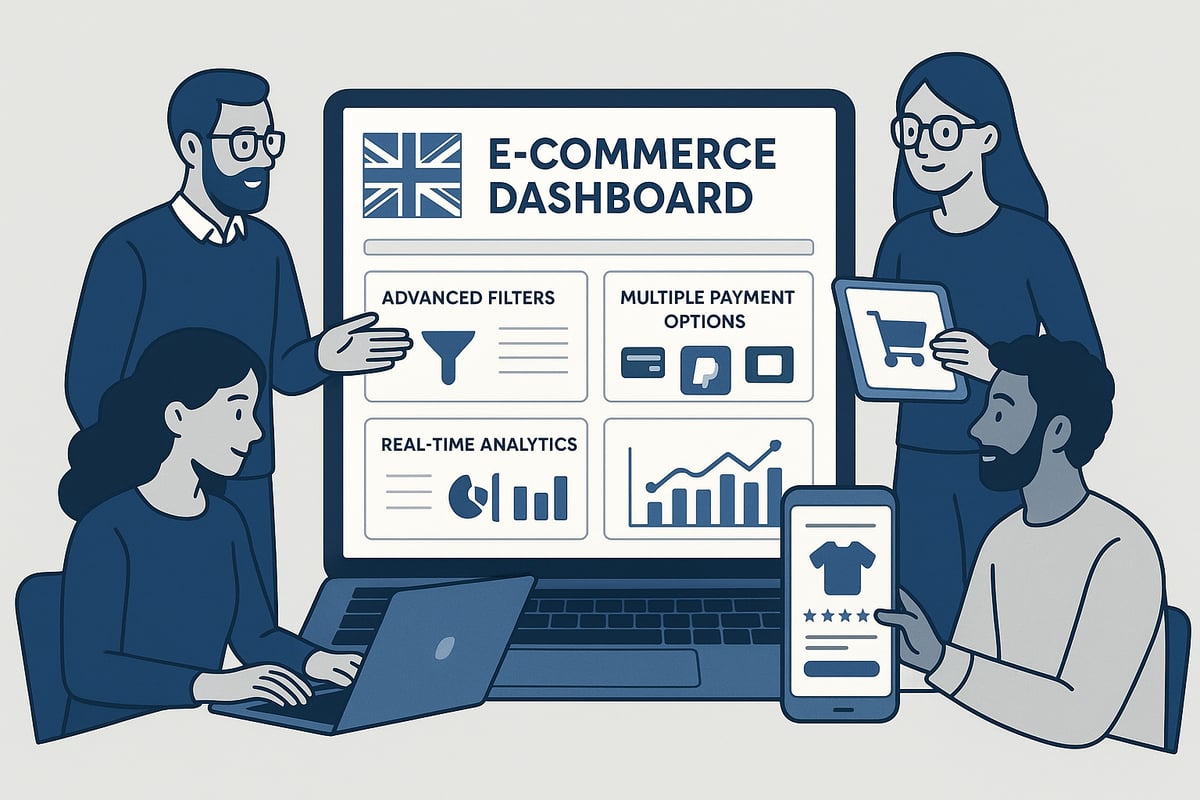
Custom ecommerce web development empowers brands to showcase their identity without compromise. Complete creative freedom allows for distinctive design elements, from colour schemes and typography to bespoke animations.
Brands can craft immersive shopping environments that align with their story. Interactive features, such as branded videos and engaging product imagery, enhance recognition and trust.
This tailored approach ensures every customer touchpoint reinforces your unique value proposition, helping your business stand out in a competitive landscape.
A core strength of custom ecommerce web development is the ability to build sophisticated product catalogues. Businesses can offer unique product types—such as bundles, subscriptions, or digital downloads—tailored to industry needs.
Advanced filtering and AI-powered product recommendations enhance user experience. For instance, a sports retailer might provide a custom kit builder with real-time inventory updates. Seamless integration with third-party inventory and order management systems further streamlines operations.
To discover how artificial intelligence is shaping these capabilities, explore AI-Powered Personalization in Ecommerce.
Modern shoppers expect a variety of secure payment and delivery methods. Custom ecommerce web development enables integration with multiple gateways, supporting emerging digital wallets and local payment solutions.
Checkout flows can be tailored for simplicity, whether one-page, multi-step, or express. Support for multi-currency transactions and regional tax calculations is essential for international growth.
With these flexible options, businesses reduce friction and cater to diverse customer preferences.
Effective marketing tools are built into custom ecommerce web development projects. Businesses can run targeted promotions, loyalty programmes, and referral schemes, all managed within a single platform.
Seamless integration with email, SMS, and social media channels boosts engagement. Personalised offers, such as abandoned cart recovery campaigns, help recover lost sales and increase lifetime value.
This approach ensures every marketing effort is data-driven and results-focused.
Custom ecommerce web development allows for fully personalised account areas. Customers can track orders, manage wishlists, and initiate returns without contacting support.
For B2B and wholesale, advanced features like multi-user accounts, bulk ordering, and custom pricing are easily implemented. Enhanced privacy controls ensure user data remains secure.
These capabilities boost satisfaction and reduce administrative overhead.
Real-time insight is crucial for ongoing growth. Custom ecommerce web development includes tailored analytics and reporting dashboards, giving teams the data they need to make informed decisions.
Integration with Google Analytics, Tag Manager, or business intelligence tools allows for deep performance tracking. AI-powered insights reveal opportunities to optimise product selection, marketing, and user experience.
Continuous improvement is built into the process, ensuring your ecommerce site evolves with your business and the wider market.
Building a custom ecommerce web development project is a rewarding journey, but it brings unique challenges that business owners must navigate with care. Understanding these obstacles early ensures you can plan and execute a successful, future-ready online store.
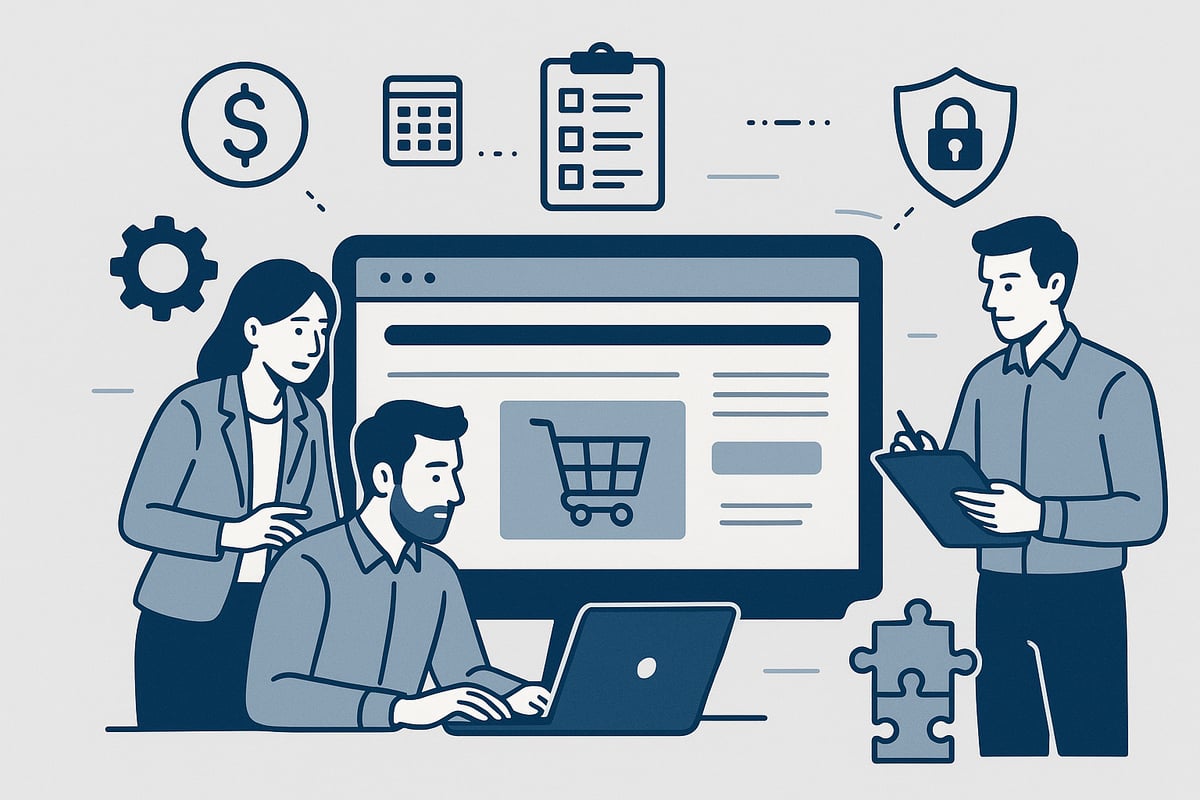
Custom ecommerce web development typically demands a higher upfront investment compared to off-the-shelf solutions. Costs include design, development, integrations, testing, and launch preparation. While the initial spend may seem daunting, it’s important to weigh this against the reduced ongoing fees and increased flexibility over time.
Transparent budgeting is vital. Break down costs into clear categories, and consider the value of phased launches or MVP approaches to spread investment. Some agencies now offer flexible payment models to ease cash flow concerns. For example, exploring pay monthly website design options can help SMEs access bespoke builds without a large initial outlay. Always compare long-term ROI against upfront expenditure when planning your custom ecommerce web development project.
Launching a custom ecommerce web development solution takes more time than using templates. Projects often span three to six months for small to medium businesses, with enterprise builds taking even longer. This extended timeline is a trade-off for a site tailored to your unique needs and future growth.
Effective project management is essential. Set clear milestones, use agile sprints, and schedule regular stakeholder reviews. Prioritise must-have features for launch and plan iterative releases for enhancements. Strong communication between all parties ensures alignment and keeps your custom ecommerce web development on track from concept to go-live.
A custom ecommerce web development site requires ongoing attention after launch. Regular updates, bug fixes, and proactive security monitoring are crucial to maintain performance and protect customer data. Adhering to GDPR and PCI DSS is mandatory for UK retailers and those trading internationally.
Consider establishing a maintenance schedule and investing in care plans from your development partner. Proactive support reduces the risk of costly breaches or downtime. Budgeting for post-launch improvements ensures your custom ecommerce web development continues to deliver value and remains compliant as regulations evolve.
Custom ecommerce web development projects are inherently more complex than out-of-the-box alternatives. You’ll need skilled developers, designers, and QA professionals familiar with ecommerce best practices and emerging technologies. Sourcing and retaining top talent can be a challenge, especially for niche integrations or advanced solutions like headless commerce.
Evaluate whether to build an in-house team, partner with an agency, or use a hybrid approach. Agencies often bring broader expertise and can fill skills gaps efficiently. Whichever route you choose, ensure clear documentation and ongoing knowledge transfer to futureproof your custom ecommerce web development investment.
As your business grows, your custom ecommerce web development must connect seamlessly with legacy systems, ERPs, and third-party platforms. Planning for scalability from day one is vital to handle traffic spikes and new business models, such as multi-storefront or multi-region operations.
Avoid vendor lock-in by prioritising flexible, open architectures. Regularly assess integration needs and test for bottlenecks or performance issues. Investing in scalable infrastructure and futureproofed integrations ensures your custom ecommerce web development can adapt as technology and customer expectations evolve.
Understanding the financial landscape of custom ecommerce web development is essential for making informed investment decisions. Let us break down the core cost areas and how they shape your return on investment.
The largest initial outlay in custom ecommerce web development covers planning, design, development, integrations, QA, and project management. Costs vary widely depending on business size, feature complexity, and chosen platform. For example, building on WordPress with a tailored approach, as explored in WordPress ecommerce web design, can lower costs while still enabling bespoke functionality.
A typical cost breakdown might include:
| Component | Percentage of Total Cost |
|---|---|
| Design & UX | 20% |
| Development | 40% |
| Integrations | 20% |
| QA & Testing | 10% |
| Project Management | 10% |
Launching with a minimum viable product and phasing in features can help control upfront investment without sacrificing the long-term benefits of custom ecommerce web development.
After launch, ongoing maintenance is crucial for sustained site performance and security. Monthly or annual expenses include hosting, updates, technical support, and proactive monitoring. Choosing a provider that bundles support, such as Pixelish’s care plans, ensures predictable costs and peace of mind.
Investing in ongoing SEO and conversion optimisation, as detailed in SEO for ecommerce websites, is a smart way to maximise the ROI of custom ecommerce web development over time. Balancing in-house and outsourced support lets you tailor your maintenance strategy to your resources and needs.
Reliable hosting and robust infrastructure are the backbone of any custom ecommerce web development project. Options include cloud hosting, managed services, or dedicated servers. Each comes with its own cost structure, scaling with traffic and storage demands.
Performance enhancements, such as CDN integration and caching, ensure fast load times and a seamless user experience. Planning for future upgrades is vital, as growing businesses will need to adapt their infrastructure. Factoring these expenses into your budget from the start safeguards your investment in custom ecommerce web development.
Integrating payment gateways, marketing tools, ERP, or CRM systems is a key part of custom ecommerce web development. Costs can be one-off or recurring, depending on the service and integration complexity.
It is wise to assess the ROI of each integration. For example, advanced analytics tools may have a higher upfront cost but deliver actionable insights for sales growth. As your business evolves, plan for future integrations to maintain flexibility and support ongoing innovation within your custom ecommerce web development strategy.
Selecting the ideal partner for custom ecommerce web development is a pivotal decision. Your choice affects not only your site's launch but also future growth and adaptability. Let's break down the process into actionable steps.
When assessing candidates for custom ecommerce web development, prioritise both technical and strategic factors. Look for proven experience with projects similar in scale and complexity to yours. Review their portfolio for successful custom builds and check client testimonials for reliability.
Technical expertise is vital. Your partner should demonstrate skill with essential platforms such as WooCommerce or Magento, and be comfortable integrating with third-party tools. For future-proofing, ensure familiarity with emerging solutions, such as Headless and API-Driven Commerce Trends, as this can impact your site's flexibility and scalability.
Transparent pricing, clear contracts, and defined deliverables are non-negotiable. Assess their approach to communication and project management, as cultural fit and responsiveness will shape your overall experience.
Choosing the right resource model for custom ecommerce web development depends on your budget, timeline, and desired control. Agencies provide end-to-end services, bringing a wide skillset and ongoing support. This is ideal for complex projects or those requiring continuous enhancements.
In-house teams offer direct oversight, but come with higher recruitment and training costs. This approach benefits businesses with ongoing, highly specific needs and technical leadership. Freelancers are cost-effective for small-scale or short-term projects, but may struggle with scalability and support.
Consider local agencies if you value personalised service and regional expertise. For example, businesses in Doncaster often select local development agencies for their understanding of the market and tailored support.
Before committing to a partner for custom ecommerce web development, ask probing questions to ensure alignment:
| Question | Why It Matters |
|---|---|
| What is your process for requirements gathering and project scoping? | Ensures you get a tailored solution. |
| How do you handle post-launch support and maintenance? | Clarifies long-term reliability. |
| Can you provide references or case studies in my industry? | Demonstrates relevant experience. |
| What security and compliance measures do you implement? | Assures data protection and legal compliance. |
| How do you ensure on-time, on-budget delivery? | Minimises risk of overruns. |
These questions help you evaluate transparency, expertise, and commitment to your project's success.
The journey with your custom ecommerce web development partner should not end at launch. Ongoing collaboration is key for continuous improvement, adapting to market changes, and scaling effectively.
Establish clear service level agreements (SLAs) and schedule regular performance reviews. Create feedback loops to capture insights from both users and internal teams. Plan for future upgrades, integrations, and technology shifts to keep your ecommerce site competitive.
Brands who foster long-term partnerships with experienced agencies often achieve sustained growth and better alignment between business goals and technical roadmaps.
As you think about the next steps for your business in 2025, remember that a custom ecommerce website isn’t just about technology—it’s about creating a seamless, memorable experience that truly reflects your brand and drives real results. If you’re ready to put the insights from this guide into action and want expert support tailored to your unique goals, we’re here to help. Let’s discuss how Pixelish can help you build a future ready online store that converts and grows with you.
Get in touch
Whether you have questions or want to explore your options, we look forward to hearing from you.

© Copyright 2025, All Rights Reserved by Pixelish