
No products in the basket.
Website Design Website Development Guide for 2026 Success
Master website design website development for 2026 with expert strategies…

Ecommerce is more competitive than ever. As we approach 2026, online retail is growing rapidly and becoming increasingly complex, making every decision count.
Selecting the right custom ecommerce development company is crucial for building scalable, secure, and conversion-focused online stores. This guide gives you the tools to make that choice confidently.
You will learn what custom ecommerce means, how to select the best partner, follow a proven hiring process, stay ahead of technology trends, avoid costly mistakes, and discover real-world success stories.
Ecommerce is more competitive than ever—will your business stand out or fall behind? Choosing the right custom ecommerce partner is the difference between a thriving online store and a costly misstep. Learn exactly what to look for, which questions to ask, and how to future-proof your investment. Follow this step-by-step guide to make a confident, informed decision in 2026.
The world of ecommerce is evolving rapidly, and a custom ecommerce development company plays a pivotal role in shaping online business success for 2026. Understanding what sets custom solutions apart is essential for brands aiming to stay ahead.
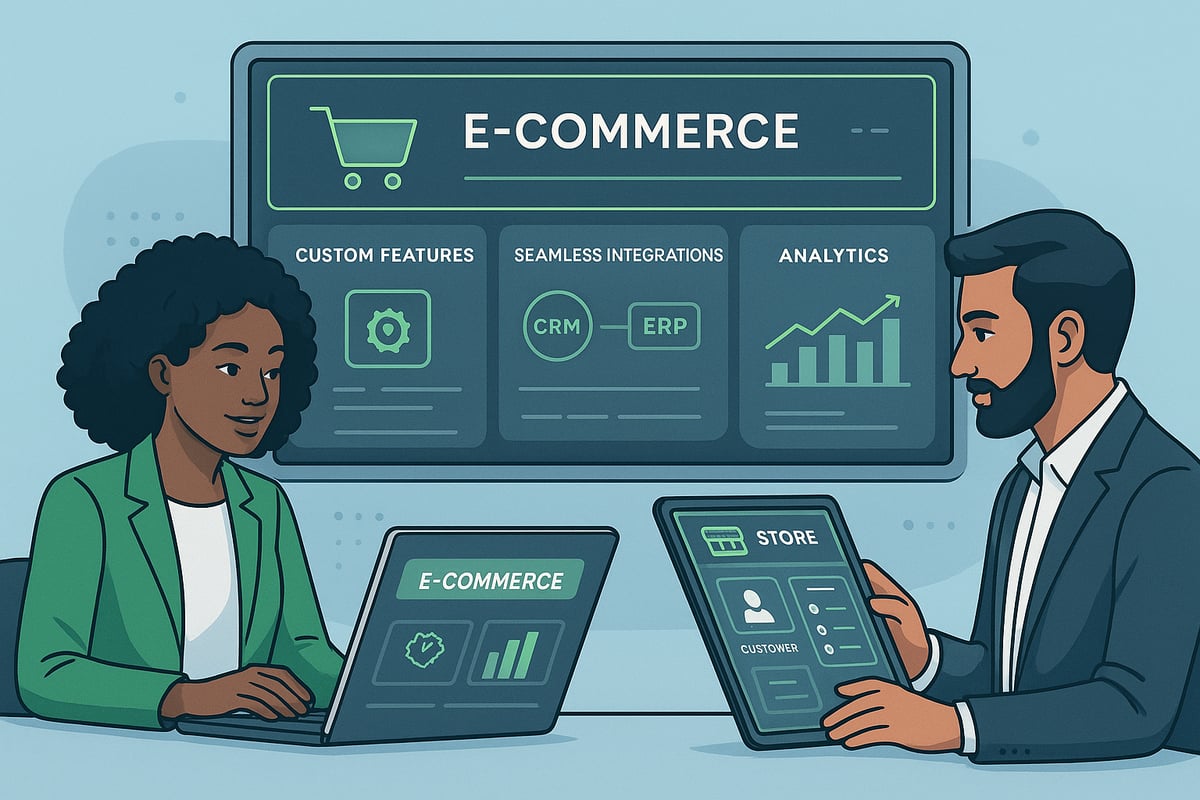
A custom ecommerce development company creates online stores tailored to unique business needs, distinct from off the shelf solutions. Custom builds prioritise brand identity, user experience, and future scalability. In 2026, this means integrating advanced features, seamless connections with CRM or ERP systems, and the flexibility to adapt as your business grows.
For example, Nerdy Banana’s custom product configurator on Shopify improved conversion rates and efficiency, showing the impact of bespoke solutions. Leading agencies report a 98% client retention rate for custom ecommerce projects, underlining their long term value. Security and compliance, including GDPR and PCI DSS, are easier to manage with custom builds.
If you want to explore how a custom ecommerce web development approach can be tailored to your business, review agencies that specialise in these services.
Choosing a custom ecommerce development company unlocks unique branding and design freedom, helping your business stand out. Personalised features like smart search, product recommendations, and interactive elements deliver a memorable user journey.
Custom architecture enhances SEO, giving you greater control over organic visibility. Security is strengthened with data encryption and secure payment integrations. Omnichannel readiness ensures your ecommerce platform supports mobile, web, and in store experiences. Nanobébé’s switch to a custom headless build led to a 117% increase in performance, while agencies report delivery times three times quicker post custom implementation.
A custom ecommerce development company is crucial if your business manages complex product catalogues or operates a multi vendor marketplace. When standard platforms cannot handle unique processes, integrations, or compliance needs, custom solutions excel.
Ambitious growth, multi site, or multilingual requirements also signal the need for bespoke development. Advanced analytics, automation, or AI driven features often demand customisation. For instance, Boodil’s financial services integration with Shopify required a custom app. In 2024, tailored ecommerce solutions generated over £2.1 million in revenue for businesses, showing the tangible benefits of going custom.
A custom ecommerce development company delivers a wide range of solutions, from bespoke B2C or B2B online stores to multi vendor marketplaces and niche platforms. Subscription and membership based commerce, international or multisite architectures, and headless or composable commerce builds are common project types.
Integrating custom payment gateways and logistics systems is another frequent request. Autoleader’s custom ecommerce site, for example, handles heavy server loads and complex integrations, ensuring stable operation and seamless user management. With the right partner, these projects can drive operational efficiency and business growth.
Selecting the right custom ecommerce development company shapes the future of your online business. With so many providers available in 2026, understanding the criteria that set top agencies apart is essential for sustainable growth and security.

A leading custom ecommerce development company demonstrates deep expertise across modern frameworks like React.js, Next.js, Node.js, Shopify, WooCommerce, and Laravel. The ability to deliver both monolithic and headless architectures shows adaptability to evolving business needs.
Integration skills are vital. Your partner should seamlessly connect your ecommerce with ERP, CRM, PIM, DAM, and payment gateways. Familiarity with cloud platforms such as AWS, Vercel, and Netlify is a must for scalability and security.
When reviewing agencies, explore their technical breadth. Agencies like Naturaily showcase scalable Shopify, headless, and custom builds. For insight into design expertise and how it complements technical skills, see how Ecommerce website designers approach bespoke solutions. Platform-agnostic recommendations and proven automation can save up to 95% in production lead time. Prioritise companies that evolve with technology and business trends.
A robust portfolio speaks volumes about a custom ecommerce development company. Look for case studies that mirror your sector and business model. Multi-year experience and a record of successful project launches are strong indicators of reliability.
Assess the variety in their work:
Scrutinise results such as conversion increases, SEO gains, and speed improvements. Pixelish’s delivery of 50+ custom WordPress projects in six months, backed by a 98% client retention rate, exemplifies transparency and capability. Agencies that share real-world outcomes provide confidence in their approach. Always value openness in sharing project successes and lessons learned.
Clear project management is the backbone of any successful custom ecommerce development company partnership. Look for a defined roadmap covering discovery, design, development, launch, and ongoing support.
Key factors include:
For example, RexSoft’s focus on strict deadlines and schedules ensures projects stay on track. Post-launch training and thorough documentation are standard practices among top agencies, with 30 days of support often included. Prioritise partners who value communication and provide clear escalation paths for any challenges.
The best custom ecommerce development company offers more than just launch services. Ongoing maintenance, updates, and security monitoring protect your investment as your business grows.
Look for flexible support plans:
Service-level agreements (SLAs) guarantee timely responses and proactive optimisation. Agencies such as Naturaily and Pixelish provide ongoing care, resulting in high client retention rates. A partnership mindset, rather than a transactional approach, ensures your platform adapts to future needs. Comprehensive support is the foundation for long-term online success.
Choosing the right custom ecommerce development company in 2026 requires a structured, methodical approach. By breaking the process into clear, actionable steps, you can minimise risk and maximise value for your business.
This guide walks you through each critical stage, ensuring you select a partner equipped to deliver a scalable, secure, and high-performing ecommerce solution.

Start by clearly identifying your objectives for the new ecommerce platform. Are you aiming to increase revenue, improve user experience, or scale into new markets? Document essential features, integrations, and compliance needs that your custom ecommerce development company must address.
List pain points from your current solution, such as slow performance or difficult integrations. Decide if your team will manage the site post-launch or if ongoing support is required. For example, Boodil’s need for custom payment integration was vital in their partner selection.
Remember, 80% of failed projects are due to unclear requirements. Use the table below to organise your priorities:
| Requirement | Priority | Notes |
|---|---|---|
| Custom Payment App | High | For open-banking support |
| Multi-site Support | Medium | For future expansion |
| GDPR Compliance | High | Legal requirement |
Be thorough at this stage to set a strong foundation for your custom ecommerce development company search.
Begin your search using directories like Clutch and GoodFirms, Google, and professional referrals. Examine portfolios to ensure each custom ecommerce development company has experience with similar business models and technical stacks.
Review client testimonials and independent reviews to validate results. Seek agencies with transparent pricing and well-documented processes. Awards and industry certifications are signs of credibility.
For advanced WooCommerce builds or seamless integrations, review WooCommerce website agency services to understand what leading agencies can offer.
Prioritise companies with measurable results, such as Naturaily’s diverse case studies. Top agencies often have 5/5 Clutch reviews and proven success across multiple industries.
Request a technical audit or an initial consultation to gauge the expertise of each custom ecommerce development company. Assess their understanding of your sector and business challenges.
Review sample code, solution architecture, and security practices. Evaluate their ability to deliver both monolithic and headless architectures. Communication style matters—ensure they are responsive and clear.
Pixelish, for example, offers in-depth discovery workshops and technical deep-dives. Agencies with over 12 years’ experience are more likely to deliver successful projects.
Cultural fit is crucial. Shared values and a collaborative approach can make or break your partnership with a custom ecommerce development company.
Ask shortlisted companies for detailed proposals, including scope, timelines, technology stack, and cost breakdowns. Compare how each custom ecommerce development company approaches the project.
Evaluate recommendations for platforms and integrations. Scrutinise post-launch support, service level agreements, and training options. Be wary of vague estimates or hidden costs.
Use a simple comparison table to organise your findings:
| Company | Timeline | Cost | Tech Stack | Support Plan |
|---|---|---|---|---|
| Agency A | 12 weeks | £25,000 | Headless | 6 months included |
| Agency B | 10 weeks | £22,000 | Shopify | 3 months included |
Transparent agencies, such as RexSoft, reduce overruns by 40%. Focus on overall value, not just price.
Interview key team members, including project managers and lead developers, from each custom ecommerce development company. Ask about previous challenges, solutions implemented, and process improvements.
Verify credentials and request references. Evaluate cultural alignment and their commitment to open collaboration. Naturaily’s team profiles and testimonials help build trust.
Direct communication is vital—70% of successful projects involve regular client-team interaction. If possible, visit their office or request a video walkthrough to assess their work environment and team dynamics.
Before starting, review the contract for deliverables, intellectual property rights, and confidentiality clauses. Set clear milestones, payment schedules, and communication protocols with your chosen custom ecommerce development company.
Schedule a project kick-off workshop to align on goals and expectations. Establish regular feedback loops and escalation procedures for potential issues. Pixelish, for instance, provides a transparent, step-by-step roadmap throughout the project.
Projects with clearly defined milestones are 30% more likely to launch on time. Both parties should commit to mutual accountability for a successful partnership with your custom ecommerce development company.
Staying ahead of technology trends is crucial for any business seeking a competitive edge with a custom ecommerce development company. The landscape in 2026 is defined by rapid innovation, demanding future-proof solutions that elevate user experience, streamline operations, and maximise security.
A custom ecommerce development company in 2026 must master headless and composable commerce. By separating the frontend from the backend, businesses gain flexibility to deliver seamless experiences across web, mobile, and even IoT platforms.
Popular frameworks like Next.js, Nuxt.js, and Hydrogen empower brands to innovate quickly. For example, Nanobébé’s shift to a headless setup boosted site performance by 117 percent and improved user experience. This architecture allows for omnichannel growth and rapid adaptation as markets change.
To explore more about these benefits, review Headless and API-Driven Commerce Trends for a deeper dive on creating custom experiences.
Partnering with a custom ecommerce development company ensures access to the latest AI and automation capabilities. AI-driven product recommendations, advanced search, and personalised content increase engagement and drive conversions.
Automation streamlines order processing, inventory management, and marketing tasks, freeing time for strategic growth. Custom chatbots and tailored user journeys mean shoppers receive relevant offers and support at every touchpoint.
Personalisation is now essential, with data showing it can lift conversion rates by up to 20 percent. In 2026, only bespoke ecommerce solutions can fully leverage these AI-powered advantages.
A custom ecommerce development company must excel at connecting platforms and services. API-first development enables modular builds, allowing seamless integration with ERP, CRM, PIM, and third-party apps.
Real-time data synchronisation ensures inventory, orders, and analytics are always up to date. For instance, Boodil’s custom Shopify app used open banking APIs to unlock new markets and revenue streams.
This trend towards microservices and modular commerce lets businesses scale rapidly and adapt to evolving needs. API-driven development is now a core requirement for modern ecommerce.
Security and performance are non-negotiable for any custom ecommerce development company. Advanced protocols like data encryption, PCI DSS, and GDPR compliance protect customer data and build trust.
Performance optimisation, including CDN usage, caching, and efficient code, reduces load times and abandonment rates. Leading companies offer regular security audits and proactive monitoring.
For example, RexSoft’s robust maintenance ensures high uptime and compliance. With 80 percent of consumers abandoning slow or insecure sites, ongoing optimisation and security updates are essential for ecommerce growth.
Choosing the right custom ecommerce development company is a critical step for your business. However, there are common pitfalls that can lead to costly setbacks or failed projects. Knowing what red flags to watch out for will help you make a confident, informed decision.
A top custom ecommerce development company should demonstrate a proven track record in delivering similar projects to yours. Beware of agencies that cannot show strong portfolios, measurable results, or client testimonials. Relying on vendors with only template-based or small-scale projects often leads to disappointment.
Ask for detailed case studies and references. If a company overpromises without evidence of delivery, this is a major warning sign. In fact, 60% of failed ecommerce projects are linked to inexperienced partners. For further insights into effective web design and SEO strategies, explore Website design and SEO strategies.
Always verify that your shortlisted partner has experience relevant to your sector and business model.
Effective communication is vital when working with a custom ecommerce development company. Watch out for vague timelines, unclear deliverables, or teams that are slow to respond. A lack of a dedicated project manager or clear points of contact can derail your project quickly.
Projects often fail due to missed deadlines and misaligned expectations. Transparent communication, including regular updates and milestone tracking, reduces project risks by 50%. Make sure your agency provides clear contracts and has a process for escalation if issues arise.
Prioritise agencies that are open about their process and keep you informed at every stage.
Partnering with a custom ecommerce development company that relies on obsolete frameworks or ignores modern security standards puts your business at risk. Avoid agencies that do not offer mobile responsiveness, performance optimisation, or compliance with current regulations.
Sites built on legacy systems often struggle with speed and integration issues. Notably, 80% of ecommerce hacks target outdated platforms. Stay ahead by selecting partners who follow the latest trends in Custom Ecommerce Development Trends 2026, including AI-powered personalisation and performance-first development.
Ask for evidence of up-to-date security protocols and regular technology updates.
Cost transparency is essential when hiring a custom ecommerce development company. Be wary of unclear pricing, hidden fees, or rigid contracts. Equally important is ongoing support. Without proper maintenance, updates, or scaling options, your investment could quickly lose value.
Businesses left without post-launch support often face unexpected downtime and costly fixes. Agencies offering comprehensive care achieve 98% client retention rates. Clarify all costs, support terms, and training provisions before signing any agreement.
Choose a partner who values long-term relationships over one-off transactions.
Explore how partnering with a custom ecommerce development company has transformed businesses across industries. These real-world examples show the measurable impact of tailored solutions, from streamlined operations to increased revenue and improved customer experiences.
A leading custom ecommerce development company recently delivered a bespoke multi-vendor marketplace (under NDA) tailored for rapid scaling. The project included vendor onboarding, robust product management, real-time analytics, and deep API integrations.
Key challenges involved handling complex order flows and ensuring seamless data synchronisation across hundreds of vendors. The solution enabled more vendors to join, improved order fulfilment, and created a scalable technical foundation.
Results included a threefold increase in delivery speed and a 95% reduction in lead time, as reported by Nerdy Banana. This demonstrates how a custom ecommerce development company can enable unique business models and rapid growth.
Nanobébé partnered with a custom ecommerce development company to migrate from a traditional platform to a headless architecture using Next.js. The main goals were to increase site speed, deliver a superior user experience, and support international expansion.
The team implemented a decoupled frontend and backend, enabling lightning-fast load times and smoother customer journeys. Adopting AI-driven personalisation, as highlighted in AI-Powered Personalization in Ecommerce, allowed the brand to tailor experiences for diverse global audiences.
The result was a 117% boost in performance and an 80% reduction in total blocking time. This highlights the importance of modern technology and AI for any custom ecommerce development company in 2026.
Boodil, a fintech innovator, required a custom ecommerce development company to build a secure open-banking integration for Shopify. The project aimed to support financial transactions across multiple markets and ensure compliance with strict security standards.
The custom solution unlocked access to over 3.5 million stores, providing seamless payment options and earning approved Shopify payment partner status. Security and scalability were prioritised at every stage.
This example shows how a custom ecommerce development company can open new revenue streams and deliver compliance by building bespoke API-driven applications.
Autoleader sought a custom ecommerce development company for a spare parts platform with Node.js and advanced third-party integrations. The platform needed to support heavy server loads, real-time product updates, and management features for both users and administrators.
The team delivered a stable, scalable platform that improved customer experience and operational efficiency. By leveraging industry-specific features, the solution addressed unique pain points that off-the-shelf platforms could not.
For businesses in specialised sectors, a custom ecommerce development company is essential for delivering tailored technology and future-proofing growth.
Pixelish, an award-winning Doncaster-based custom ecommerce development company, has delivered over 50 bespoke WordPress and WooCommerce projects in just six months. Their expertise covers custom design, multisite networks, seamless migrations, and comprehensive support.
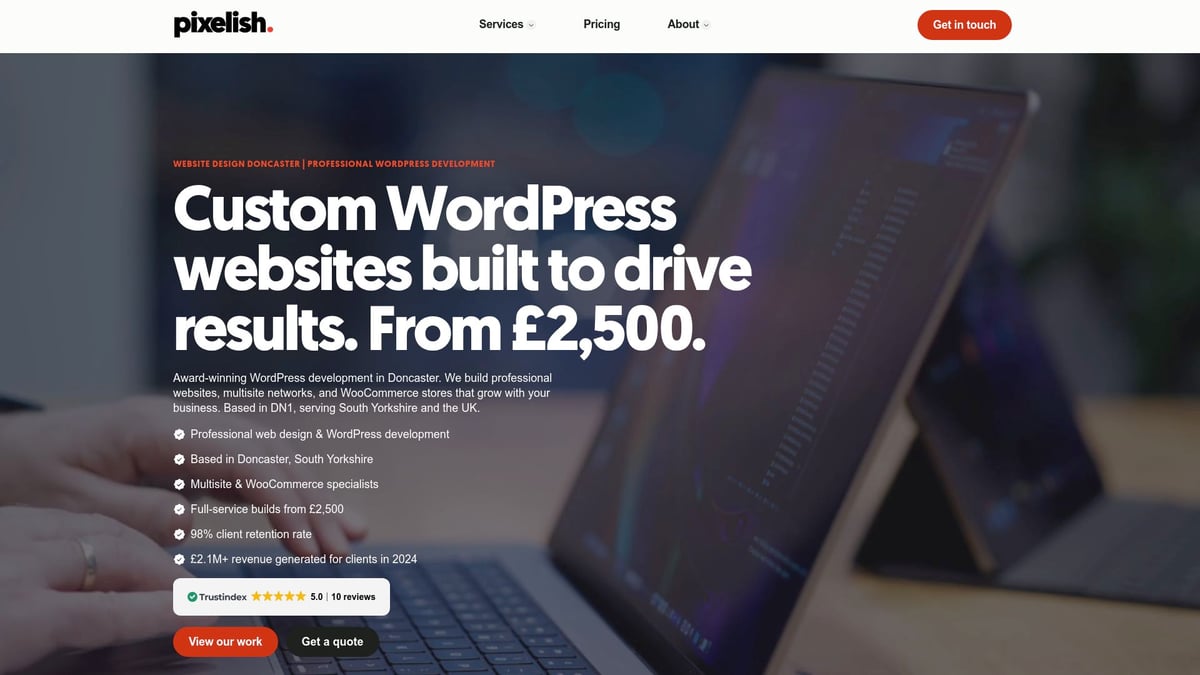
With a 98% client retention rate and over £2.1 million generated in client revenue in 2024, Pixelish provides transparent pricing, step-by-step roadmaps, and local support. Clients include NHS, Rejuvenair, and top South Yorkshire brands.
For UK businesses seeking a growth-focused custom ecommerce development company, Pixelish offers proven results and ongoing partnership.
These case studies reveal key lessons for businesses choosing a custom ecommerce development company:
Investing in the right custom ecommerce development company in 2026 is critical for sustained online growth and competitive advantage.
As you’ve seen throughout this guide, choosing the right custom ecommerce development company is crucial for building a secure, scalable, and high-converting online store in 2026. Whether you’re planning a bespoke solution, integrating advanced features, or looking for ongoing support, making an informed choice sets the foundation for real business growth. If you’re ready to take the next step or simply want friendly, expert advice tailored to your needs, we’re here to help. Let’s talk about your goals and how we can help turn your vision into results—Get in touch.

© Copyright 2025, All Rights Reserved by Pixelish