
No products in the basket.
Website Design Website Development Guide for 2026 Success
Master website design website development for 2026 with expert strategies…

Thinking of investing in a new website in 2025? Understanding website packages pricing is more crucial than ever as businesses seek value and results from their digital investments. This guide aims to demystify website packages pricing, explain what’s included across different tiers, and set realistic expectations for the year ahead. You’ll discover the main types of website packages, typical pricing ranges, key factors that affect costs, essential features to look for, and how to choose the right package for your business. Make smarter decisions with clear, up-to-date insights on the evolving landscape of website packages pricing.
Choosing the right website package in 2025 is key to getting value for your investment. With so many options, understanding what each package includes and how it impacts your website packages pricing is essential. Let’s break down the main types, features, add-ons, and support options so you can make an informed decision.
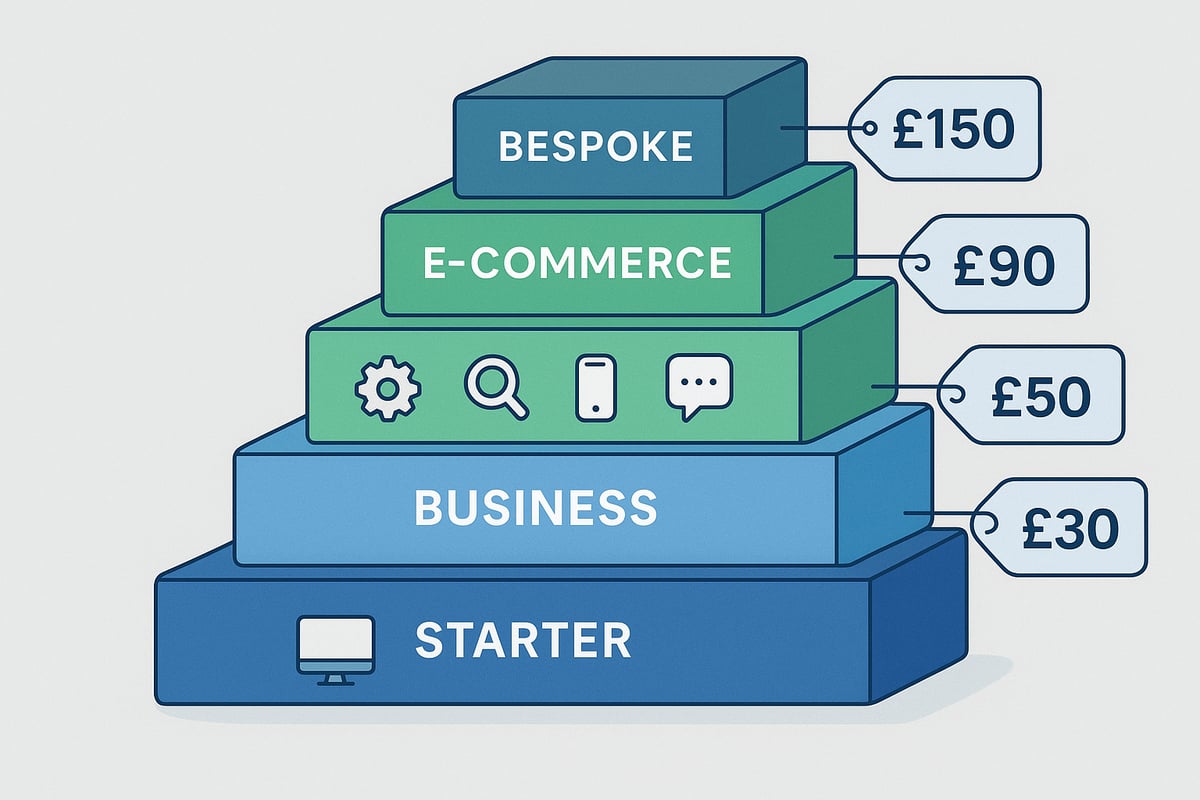
Website packages pricing varies widely based on the type of package you select. The most common categories are starter, business, pro, e-commerce, and bespoke solutions. For example, a starter package may begin at £399+VAT for a basic four-page site, ideal for new businesses. Pro packages, aimed at growing SMEs, typically start at £899+VAT and include custom features.
E-commerce packages focus on online shops and start around £2,750, with features tailored to retailers. Bespoke solutions are fully customised for enterprises or unique needs. Packages differ in scope, page limits, and audience, so matching the right package to your business goals is vital. To compare what’s included in each tier, the Website design pricing page offers clear breakdowns and live examples.
Most website packages pricing tiers include a set of core features. These typically cover:
For instance, Immersive Media’s packages provide up to 10 pages, technical support, and a blog or news section as standard. These features form the foundation of any modern business website.
E-commerce packages are designed for online retailers and include advanced features that affect website packages pricing. Standard inclusions are product catalogues, payment gateways, inventory management, and customer account systems.
For businesses seeking more, add-ons like SEO copywriting bundles (e.g., 30–50 optimised pages), advanced analytics, and custom integrations are often available. Immersive Media’s e-commerce packages start from £2,750, with options for ongoing maintenance and SEO copywriting, providing flexibility for growth.
Ongoing support is a critical factor in website packages pricing. Many agencies offer 24/7 ticketing systems, video tutorials, and direct access to a project manager. Maintenance typically includes daily backups, security updates, and hosting management.
Training is also common, with 1-2-1 walkthroughs, admin panel guidance, and clear documentation. According to Pixelish, agencies that provide robust support and maintenance see a 98% client retention rate, highlighting its importance for long-term website success.
Comparing website packages pricing across tiers helps clarify the tangible benefits at each level. For example:
| Package | Pages | Hosting | Logo Design | Training | Price (from) |
|---|---|---|---|---|---|
| Starter | 4 | Included | No | No | £399+VAT |
| Power | 8 | Free | Yes | Yes | £850+VAT |
| Pro | 9+ | Yes | Yes | Yes | £1,850+VAT |
The Power package, for instance, offers eight pages, free hosting, logo design, and training, making it a strong mid-tier option. Understanding these differences ensures you choose the package that delivers the best fit and value for your business.
Understanding website packages pricing is essential as we head into 2025. The landscape is rapidly evolving, and business owners must keep up with trends to make informed decisions. Let us break down the latest pricing ranges, what is driving changes, and what to expect from modern packages.
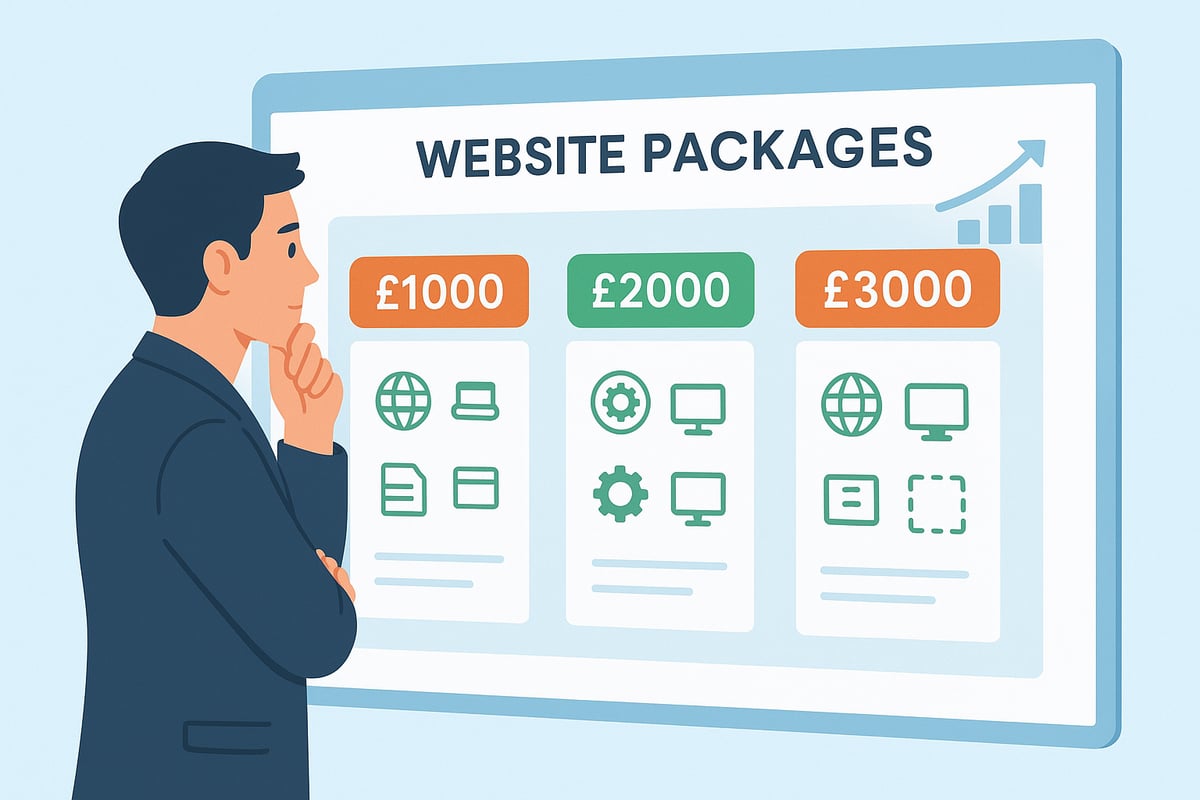
Website packages pricing in the UK remains highly competitive. Starter packages typically range from £399 to £850, covering 4 to 8 pages and fundamental features. Business and pro packages often fall between £900 and £2,750, offering custom designs and advanced functionality. E-commerce packages start at £2,750 and can exceed £5,135, reflecting the inclusion of product management, payment systems, and ongoing support.
For a detailed comparison of these figures and what influences them, see this UK web design pricing trends 2025 resource, which breaks down costs by site type and complexity. Pricing varies based on agency expertise, included services, and bespoke requirements.
Several factors are set to influence website packages pricing in 2025. There is a growing demand for bespoke designs and enhanced user experiences. Google’s evolving algorithms mean that SEO and high-quality content are now essential, not optional. Security and compliance standards, such as GDPR and accessibility, are stricter, requiring more robust measures.
Inflation and the increased cost of skilled labour also contribute to rising prices. Agencies must invest in ongoing training and cutting-edge tools, which is reflected in the final cost. As a result, businesses should anticipate modest increases in pricing, especially for highly customised solutions.
Modern website packages pricing now includes more than just design and development. In 2025, expect comprehensive SEO and analytics integrations as standard. AI-powered features like chatbots, automation, and content personalisation are increasingly common in mid-tier and premium packages.
There is a stronger emphasis on mobile-first design and accessibility, ensuring websites cater to all users. Ongoing support and maintenance are now often bundled in, providing peace of mind and enhancing long-term value. These enhancements justify higher price points while delivering measurable business benefits.
Value-added services are reshaping website packages pricing. Agencies now bundle copywriting, branding, and strategic consultation into many packages. Ongoing digital marketing support, such as SEO, PPC, and social media management, is also frequently included.
Training and onboarding help internal teams manage their new sites effectively. For example, packages offering 30 to 50 pages of SEO-optimised content can range from £4,330 to £4,950. These comprehensive solutions drive results but increase overall investment, so businesses must weigh the benefits carefully.
Recent data highlights key trends in website packages pricing. WordPress now powers 43.1% of global websites, underlining its dominance. The demand for e-commerce solutions is rising by 10 to 15% annually, reflecting broader digital adoption.
Three-quarters of businesses now favour packages with bundled support and maintenance, viewing them as essential for long-term success. This shift means agencies are focusing on all-in-one solutions, shaping the future of website packages pricing for years to come.
Understanding what drives website packages pricing is essential for any business considering a new website in 2025. The final cost is shaped by several key factors, each influencing the level of investment and value you receive. Let’s break down what matters most.

The scope of your project is a major driver of website packages pricing. The number of pages, required functionalities, and desired integrations all play a direct role. For example, a simple brochure site with five pages and basic contact forms will sit at the lower end of the pricing scale. In contrast, complex e-commerce platforms with product catalogues, custom booking systems, or directories will naturally command higher fees.
Adding unique features or advanced integrations, such as membership areas or third-party APIs, further increases complexity. As outlined in this Factors affecting web design costs guide, each layer of functionality adds to the investment needed. Matching your requirements to the right package helps control costs while ensuring the site meets your goals.
Bespoke design and branding add significant value but also influence website packages pricing. Template-based designs are more affordable, offering quick deployment and standard layouts. However, if your business needs a unique visual identity, custom design is essential.
Branding services, such as creating a new logo or developing a comprehensive brand style guide, are often included in higher-tier packages. The number of design revisions and the level of client collaboration can also affect the timeline and final cost. For example, some providers offer free logo creation in mid-tier packages, helping businesses establish a strong brand presence without extra expense.
Professional content creation is a vital part of website packages pricing. High-quality copywriting, image sourcing, and blog setup ensure your message resonates and ranks well in search engines. Packages may include a set number of SEO-optimised pages, with some agencies offering 30–50 pages to boost visibility.
SEO services often cover keyword research, meta data configuration, and structured on-page layouts. The more comprehensive the content and SEO offering, the more value (and cost) the package will carry. Investing in strong content upfront pays dividends in search rankings and user engagement.
Technical elements are another core factor in website packages pricing. Most packages include a content management system (such as WordPress), but requirements for e-commerce, advanced analytics, CRM, or bespoke integrations can raise the price.
Hosting quality, storage, bandwidth, and SSL certificates are often bundled, but premium features like API integrations or third-party tool connections are typically reserved for higher-end packages. The choice of technology stack and the need for future scalability should guide your selection.
Support and maintenance provisions are increasingly important in website packages pricing. Providers typically offer different support tiers, including self-managed, care, or fully managed options. Services may include daily backups, security updates, uptime monitoring, and performance optimisation.
Here’s an example of support tiers:
| Support Tier | Features Included | Typical Cost (per month) |
|---|---|---|
| Self-managed | Basic hosting, security patches | £0–£50 |
| Care | Backups, updates, ticket support | £60–£120 |
| Fully managed | All care features + dedicated manager, monitoring | £150–£240+ |
Agencies with robust support retain more clients and provide peace of mind, ensuring your website remains secure and up to date.
Choosing the right website packages pricing tier can be daunting, but breaking down your needs makes the process far more manageable. Let us guide you through the essential steps for finding the best fit.
Start by defining what you want your website to achieve. Is your main goal to generate leads, sell products, or build brand awareness? For growing businesses, scalability is crucial, so select a package that can expand as your needs evolve.
Think about your target audience and the features they expect. For example, a franchise might benefit from multisite networks, while a local retailer may only need a simple e-commerce setup. Aligning your business objectives with website packages pricing ensures you avoid unnecessary costs and invest in features that matter.
Not all features are essential for every business. Begin with a must-have list, such as contact forms, e-commerce functionality, or blog integration. Compare this against nice-to-have extras like live chat or advanced analytics.
To help decide, use a table to weigh the value:
| Package | Pages | E-commerce | Support | Price (from) |
|---|---|---|---|---|
| Starter | 4 | No | Basic | £399 |
| CMS Pro | 9+ | Optional | Priority | £1,850 |
Balancing features and cost helps you avoid overpaying. For a deeper dive into package comparisons, see Affordable website packages analysis.
Every website packages pricing tier comes with its boundaries. Starter packages often limit you to four pages, while higher tiers provide more flexibility and resources.
Check for restrictions on storage, user accounts, and customisation options. If you plan to grow, ask about upgrade paths. For example, the Starter package may restrict you to the basics, but Pro packages offer additional pages and advanced custom features.
Clarifying these limitations early prevents frustration and unexpected costs as your business evolves.
Ownership is a critical factor in website packages pricing decisions. Confirm that you will fully own your website after payment, including all images and content.
Review licensing terms for any third-party assets used. Understand the hosting and domain arrangements, especially renewal costs and transfer rights. Leading providers, such as Cheap Web Design, grant full rights post-payment, but always check the contract to avoid surprises.
Maximising value in website packages pricing means negotiating for the features and support you truly need. Many agencies offer tailored bundles or discounts for multi-site deals and bundled services.
For example, you might secure a 10% discount when combining copywriting and maintenance. Do not hesitate to ask for added extras, like free SSL certificates or additional training. Customisation ensures your investment delivers the best return for your specific business goals.
Investing in a new website is a significant business decision. To help you navigate website packages pricing in 2025, here is a clear, step-by-step guide. Follow these five essential steps to secure a solution that matches your goals, budget, and expectations.
Begin by clarifying what you need from your new website. Identify your business goals and the site’s primary purpose, such as generating leads, selling products, or building brand awareness.
List your must-have features. These might include:
Think about your target audience and the user journey. Research examples of websites you admire to help communicate your vision. This early clarity will ensure your website packages pricing discussions stay focused and productive.
With your requirements in hand, start researching potential web design agencies. Look for providers with proven experience in your industry and positive client feedback.
Key actions include:
For a deeper understanding of what influences website packages pricing, explore resources like How much does a website cost? to benchmark realistic price ranges for 2025. Create a shortlist of 2–3 agencies whose style and expertise align with your needs.
Reach out to your shortlisted agencies and request comprehensive, itemised proposals. A thorough proposal should include:
Ask about ongoing support, hosting, and maintenance arrangements to avoid surprises later. Clarify payment schedules and contract terms. Reviewing these details side by side will help you evaluate the total value each provider offers.
Now, compare proposals to determine which agency best meets your criteria. Consider not just the initial website packages pricing, but also the long-term value and flexibility.
Assess each option by looking at:
Negotiate for extra value where possible, such as bundled services or training. Ask about possible discounts for multi-site projects or additional services. Remember, the best deal combines quality, service, and transparency.
Once you have selected your provider, carefully review the contract. Confirm you will have full ownership of your website after payment and clarify licensing for all content and images.
Ensure you receive:
Plan for future upgrades and ongoing success by aligning your launch strategy with your broader business objectives. A smooth launch sets the tone for ongoing digital growth.
Understanding website packages pricing in 2025 is vital for any business planning a new site. Below, we address the most common questions, offering concise, practical answers to help you set clear expectations and avoid surprises along the way.
For most small businesses, website packages pricing typically sits between £850 and £2,750 for brochure-style sites. If you need e-commerce features, expect to invest £2,750 or more. The final cost depends on factors like the number of pages, design complexity, and support level. Always compare inclusions before making a decision.
Hidden costs can occur if you require premium plugins, extra pages, or complex integrations. It is essential to ask for a full, itemised quote upfront. To better understand all cost components, review this website cost components 2025 guide. This ensures your website packages pricing remains transparent and predictable.
The typical build time for a custom WordPress website package is four to six weeks. If your project involves advanced e-commerce, intricate features, or heavy content creation, timelines may be longer. Carefully review the proposed schedule in your agreement to avoid delays.
Most agencies design website packages pricing with flexibility in mind, allowing you to upgrade for more features, additional pages, or enhanced support. Confirm upgrade options before signing a contract. This ensures your website can scale as your business grows without major disruption.
Leading agencies, such as Pixelish and Cheap Web Design, grant you full ownership of your website once payment is complete. You should clarify rights to all images, written content, and source code before launch. This protects your investment and ensures long-term control over your digital presence.
As you look ahead to 2025 and consider investing in a new website, making sense of the different packages and what truly adds value is essential. We've explored the latest trends, essential features, and what impacts pricing—so you can set realistic expectations and make confident choices. If you’re ready to discuss your unique goals or want expert guidance on the right package for your business, let’s take the next step together. You deserve a website that delivers results and grows with you.
Get a quote

© Copyright 2025, All Rights Reserved by Pixelish