
No products in the basket.
Website Design Website Development Guide for 2026 Success
Master website design website development for 2026 with expert strategies…

In 2026, the digital landscape is more competitive than ever. For any business web designer, building a high-performing website is crucial. Today’s business owners and entrepreneurs must meet rising customer expectations while standing out in a crowded online marketplace.
Expert web design is the key to differentiating your brand, increasing conversions, and building long-term success. This guide is packed with proven strategies, practical tips, and up-to-date trends to help you create a website that delivers measurable results.
We will walk you step by step through every essential stage, from planning and design to optimisation and ongoing management. Whether you are looking to boost leads, improve user experience, or future-proof your brand, this comprehensive guide is your roadmap to success in 2026.
Strategic planning is the critical first step for any business web designer aiming to build a site that delivers real results. Before a single pixel is placed, you need clarity about what the website must achieve and who it is designed to serve. Effective planning creates the foundation for every design, development, and optimisation decision that follows.

A successful business web designer starts by defining clear business objectives. Are you aiming to generate leads, drive sales, or build brand awareness? Each goal requires a tailored approach. Next, create ideal customer profiles and user personas, detailing demographics, needs, and online behaviours.
Align website features with these objectives. For example, an e-commerce business might focus on streamlined checkouts and product showcases, while a consultancy prioritises enquiry forms and case studies. According to HubSpot (2024), 75 percent of businesses with defined web goals report higher ROI. One local retailer, after refining its goal to boost online sales, saw a significant lift in revenue. For tailored solutions, consider exploring Business website design services that match your objectives.
Analysing competitor websites is essential for every business web designer. Use tools like SEMrush or SimilarWeb to benchmark performance, uncover strengths, and spot weaknesses. Look beyond the surface to identify gaps in the market and unique selling propositions.
Competitor A, for example, overlooked mobile UX, missing out on a large segment of mobile shoppers. By studying their shortcomings, you can identify opportunities to differentiate your site and offer a superior user experience. Regularly reviewing industry trends ensures your design remains relevant and competitive.
Measurable goals are vital for any business web designer. Define KPIs such as website traffic, conversion rates, and bounce rates. Use analytics tools like Google Analytics 4 and Hotjar to monitor performance and user behaviour.
Set up dashboards for ongoing tracking so you can make informed decisions. Forrester (2025) reports that 68 percent of high-growth companies review web KPIs monthly. Establishing these metrics early allows you to measure progress, celebrate quick wins, and adapt strategies as needed.
Budgeting is a key aspect for a business web designer. Estimate costs for design, development, content, and ongoing maintenance. Decide if in-house, agency, or freelance support best fits your needs and resources.
Consider these example budgets:
Factor in costs for marketing and updates. A clear budget ensures you allocate resources efficiently and avoid unexpected surprises.
A structured roadmap guides every business web designer through the project lifecycle. Start with discovery, then move through design, development, content creation, testing, and launch. Assign roles and responsibilities — designer, developer, copywriter, and project manager — to keep tasks on track.
A typical SMB website project takes 4–8 weeks, while complex builds may require 12 weeks or more. Use a Gantt chart to visualise milestones and dependencies, ensuring transparency and accountability. Careful planning reduces risk, keeps the project on schedule, and sets the stage for a successful launch.
In 2026, a business web designer must balance aesthetics with results. Design is not just about looking good—it is about building trust, boosting engagement, and driving growth. Understanding the modern principles and best practices outlined below will help you deliver a website that stands out and performs in a crowded digital landscape.
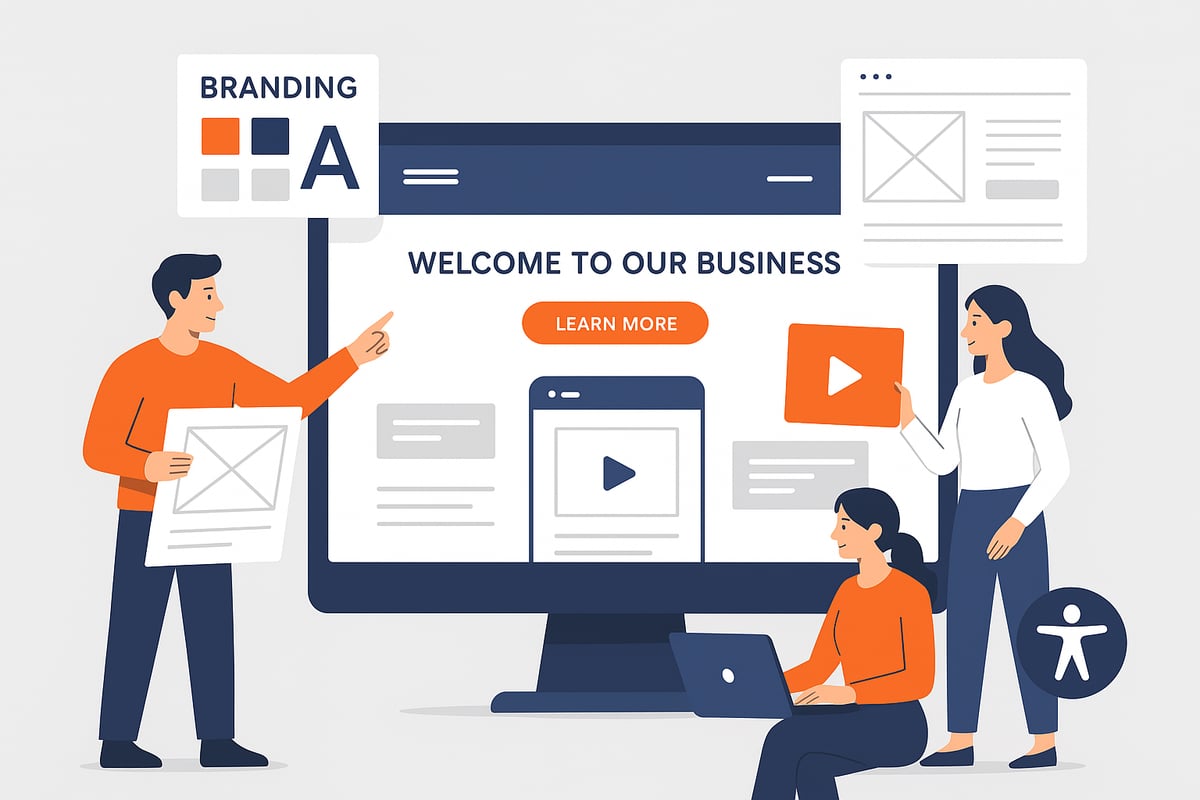
A business web designer puts the user at the heart of every decision. Usability and accessibility are essential from the outset. Applying the latest WCAG 2.2 guidelines ensures that everyone, including the 1 in 5 UK users with a disability, can use your site comfortably.
Start with clear navigation, logical structure, and readable fonts. Test colour contrast for visibility. For example, a service business that adopted accessible design saw a measurable increase in conversions. For more on future-focused approaches, see Web Design Trends in 2026. Every business web designer should prioritise inclusivity for maximum reach and impact.
Translating your brand identity into web design is essential for any business web designer. Use consistent colours, typography, and imagery that reflect your brand values. A style guide is invaluable for maintaining a unified look across every page and device.
Trust is built through visual consistency. According to Nielsen, brands with a cohesive visual language see 23% higher recall. Consider creating a table to document your colour palette, font styles, and logo usage. This helps a business web designer keep every element aligned, building recognition and credibility.
A business web designer must prioritise mobile users, as over 70% of UK web traffic now comes from mobile devices. Design layouts that adapt smoothly to all screens, ensuring buttons, text, and images remain clear and usable on any device.
Start with mobile-first wireframes, then scale up for desktops. Use flexible grids and scalable assets. Progressive enhancement ensures core content always loads, while graceful degradation allows for older browsers. One e-commerce site doubled engagement after a mobile-first redesign by their business web designer.
A business web designer knows that layout choices directly affect conversions. Place calls to action (CTAs) where users naturally look, such as near headlines or after key benefits. Use the F-shaped reading pattern to guide attention through the page.
Whitespace and contrast help users focus, while a clear visual hierarchy makes navigation effortless. Effective CTAs can increase conversions by up to 80 percent. Test different placements and button colours to see what resonates best with your audience. The business web designer should always be data-driven in layout decisions.
For a business web designer, content is as crucial as visuals. Craft compelling headlines that speak directly to your target audience’s needs. Balance text with visuals and interactive elements to keep visitors engaged.
Storytelling builds an emotional connection. Incorporate testimonials, case studies, and trust signals like certifications or awards. For example, a story-driven homepage increased dwell time by 40 percent for one business. The business web designer should work closely with copywriters to ensure content aligns with user intent and brand voice.
Modern users expect engaging experiences, so a business web designer must integrate multimedia thoughtfully. Use video, animations, and micro-interactions to add depth and interest. Optimise all media for speed and accessibility, using alt text and lightweight formats.
Interactive features like product demos or calculators boost engagement and help users make decisions. According to Wyzowl, pages with video see 2.6 times higher time-on-site. The business web designer should test these elements to ensure they enhance, not hinder, the user experience.
Selecting the right technology stack is a crucial decision for every business web designer. The tools and platforms you choose will directly impact your site's performance, scalability, and future success. Let’s break down the key considerations to ensure your website stands the test of time in 2026.
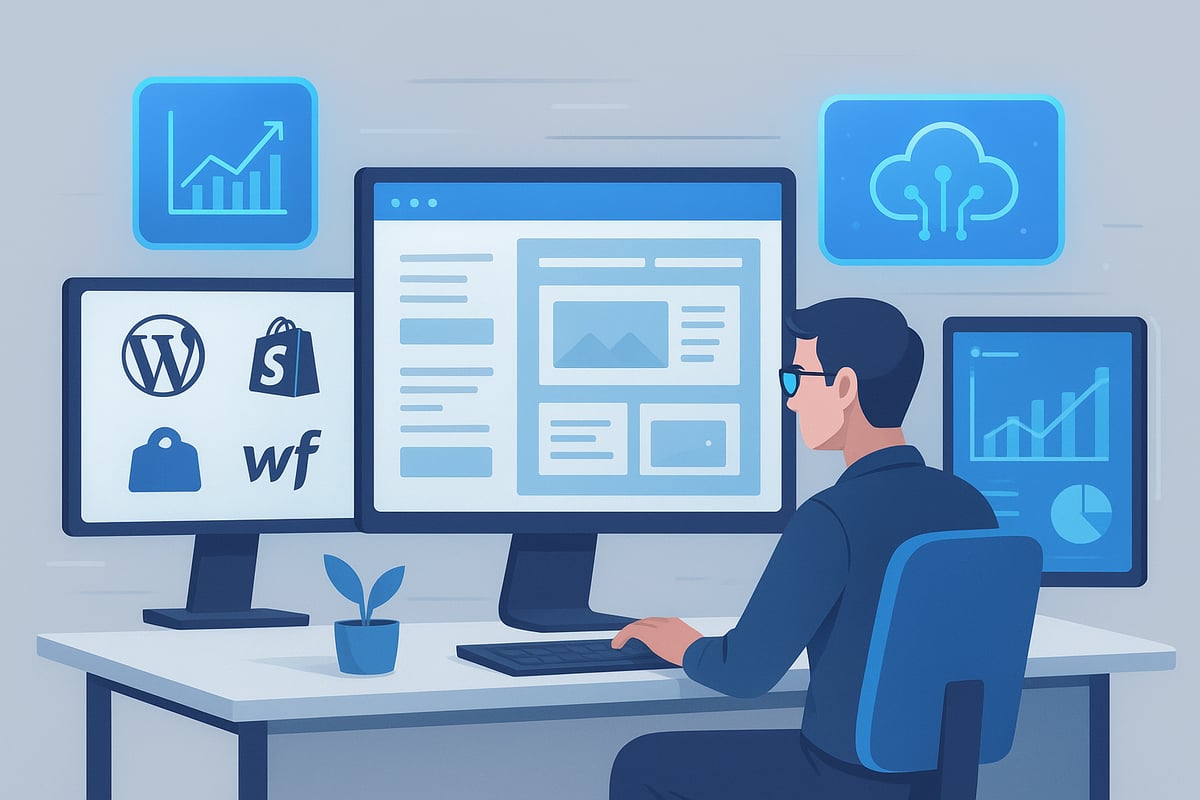
A business web designer must carefully evaluate the available content management systems (CMS) to match business goals and user needs. WordPress remains a top choice for its flexibility, especially for small and medium businesses. Shopify excels in e-commerce, while Webflow empowers designers with visual control. Custom solutions can offer tailored features for unique requirements.
| Platform | Best For | Pros | Cons |
|---|---|---|---|
| WordPress | SMBs, blogs | Flexible, large ecosystem | Needs regular updates |
| Shopify | E-commerce | Easy setup, secure payments | Monthly fees, less custom |
| Webflow | Design-focused | Visual design power | Steeper learning curve |
| Custom | Enterprise/unique | Fully bespoke, scalable | Higher initial investment |
For example, a regional retailer chose WordPress for its blend of affordability and adaptability, allowing the business web designer to implement custom features as the company grew.
To maximise website effectiveness, a business web designer should integrate essential tools from the outset. CRM systems help manage leads, while email marketing platforms drive ongoing engagement. Analytics tools like Google Analytics 4 provide data-driven insights. Payment gateways are vital for e-commerce operations.
When choosing plugins or integrations, always assess security, compatibility, and long-term support. For instance, integrating a CRM enabled a client to track leads more efficiently, boosting conversion rates by 50 percent. A well-chosen set of integrations allows the business web designer to deliver seamless customer experiences and future-proof site functionality.
Site speed is a critical ranking and user experience factor. A business web designer should make performance optimisation a top priority. Tools such as Google PageSpeed Insights, GTmetrix, and Cloudflare help identify bottlenecks and improve load times. According to Website Speed and Page Load Time Statistics For 2026, more than half of users leave a site if it loads in over three seconds, making speed a non-negotiable element.
Regularly monitor site performance and address issues like large images, unoptimised scripts, or excessive plugins. By prioritising speed, the business web designer ensures higher engagement, better SEO, and improved conversion rates.
A modern business web designer must plan for growth and emerging trends. Modular design and headless CMS options offer flexibility as business needs evolve. Preparing for technologies like AI, voice search, or augmented reality ensures your site remains competitive.
For example, scalable architecture allowed one client to handle a sudden tenfold increase in traffic during a marketing campaign. Investing in future-proof solutions, such as those discussed in Custom website development insights, gives the business web designer the tools to build robust, adaptable sites that grow with your brand.
A business web designer must prioritise user experience and accessibility at every stage. Modern business websites compete not only on design but on how intuitively users can achieve their goals. Strategic UX decisions can turn casual visitors into loyal customers, while accessibility ensures your site welcomes everyone.
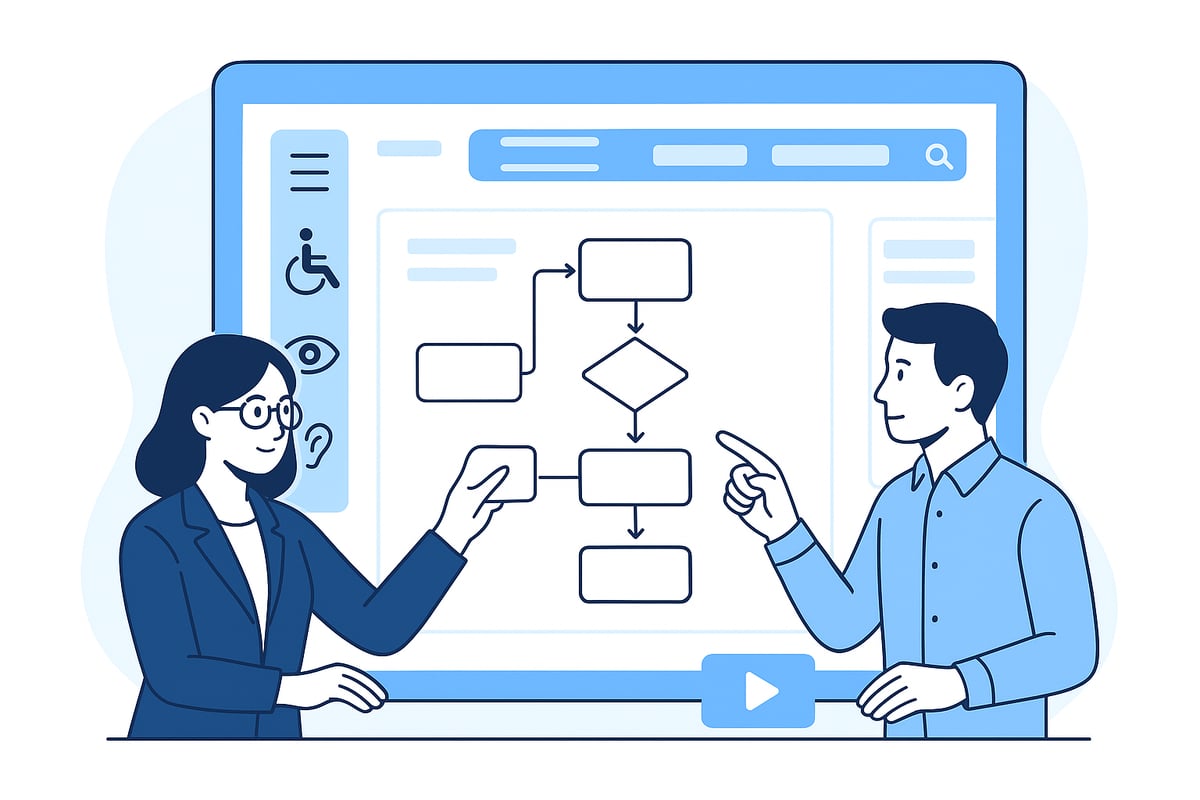
Every business web designer should start by mapping user journeys. This process involves outlining the key steps a visitor takes from landing on your homepage to completing a desired action, such as filling out a form or making a purchase.
Effective navigation is crucial. Clear menus, logical categories, and visible search improve usability. For example, streamlining navigation helped one client reduce bounce rates by 30 percent, as users quickly found what they needed.
Consider these tips:
Thoughtful navigation not only improves user satisfaction but also boosts your business objectives.
A business web designer must design with inclusivity in mind. Accessibility ensures everyone, including users with disabilities, can interact with your site. Implement ARIA labels for screen readers, provide descriptive alt text for images, and enable full keyboard navigation.
UK businesses are legally required to meet accessibility standards under the Equality Act 2010. Simple improvements, like increasing contrast and using larger font sizes, make a significant difference. One business saw a 15 percent increase in enquiries after addressing accessibility barriers.
Best practices include:
These steps ensure your digital presence is welcoming and compliant.
Personalisation is now a standard expectation. A business web designer can leverage user data to tailor content, offers, and experiences to individual preferences. Tools like HubSpot and Dynamic Yield enable dynamic content blocks, product recommendations, and location-based messaging.
Personalised experiences drive results. According to Econsultancy, websites with tailored content see 20 percent higher conversion rates. Start small by greeting returning users by name or showcasing relevant products.
Key personalisation tactics:
Personalisation turns your website into a powerful business tool.
Continuous improvement is essential for any business web designer. Usability testing methods, such as A/B tests, heatmaps, and user interviews, uncover friction points and opportunities. Gathering feedback directly from users ensures your updates are data-driven.
Iterative testing pays off. One business improved its Net Promoter Score by 18 points after implementing changes based on user insights. Establish regular feedback loops using surveys and support channels to prioritise updates.
Effective testing steps:
This approach ensures your website evolves with your audience’s needs.
Building a successful business website in 2026 requires more than just great design. As a business web designer, you must master SEO, security, and compliance to keep your site visible, trusted, and future-ready. Let’s break down the essentials for each area.
For any business web designer, staying ahead in SEO means understanding the latest ranking factors. Core Web Vitals, E-E-A-T (Experience, Expertise, Authoritativeness, Trustworthiness), and structured data are now essential for strong search performance.
On-page and technical SEO should be seamlessly integrated from the start. This includes optimising metadata, improving site speed, and ensuring mobile responsiveness. Implementing schema markup can directly boost organic clicks, as seen in a recent case where a retail site increased clicks by 27%.
For a deeper dive, explore how SEO and web design integration can amplify your site's performance. A business web designer who prioritises these elements ensures a solid foundation for digital growth.
Local visibility is a game changer for UK businesses. As a business web designer, focusing on “near me” searches and map packs can drive real-world results. Optimise your site for local keywords, create location-specific landing pages, and ensure your Google Business Profile is complete.
Encourage positive reviews and manage them actively. According to BrightLocal, 88% of local searches result in a call or visit within 24 hours. Proper local SEO helps your business connect with nearby customers and stand out in crowded markets.
Content remains the engine of online growth. A business web designer should help clients develop a content calendar targeting authority and engagement. Regular blogging for long-tail keywords supports thought leadership and attracts qualified traffic.
Balance evergreen topics with timely insights. Incorporate case studies and customer stories to build trust. A weekly blog cadence has proven to triple organic traffic for many businesses, underscoring the value of consistent, strategic content updates.
Security is non-negotiable for any business web designer. Implement SSL certificates for every site, use robust firewalls, and schedule regular malware scans. GDPR compliance and transparent privacy policies are mandatory for UK businesses.
Stay vigilant: 43% of cyberattacks target SMBs, making proactive security a must. Educate clients on safe password practices and ensure all plugins and integrations are regularly updated to minimise vulnerabilities.
A business web designer’s job does not end at launch. Ongoing maintenance includes regular updates, backups, and performance monitoring. Plan for scalability to handle new features or traffic spikes.
Schedule quarterly reviews to assess site health and user feedback. Proactive maintenance can prevent critical downtime, as shown when regular updates helped a retailer avoid issues during peak sales. Prioritise future-readiness to keep your website competitive and secure.
Launching a new website is a pivotal moment for any business web designer. However, success does not end at go-live. To ensure lasting impact, you must focus on rigorous quality checks, strategic promotion, ongoing analytics, and continuous evolution. This approach guarantees your site delivers measurable results and supports business growth.
Before unveiling a new site, a business web designer must conduct thorough quality assurance. This process includes checking compatibility across browsers and devices, ensuring all forms and integrations function correctly, and validating that every link, image, and interactive element operates as intended.
Key steps to include in your checklist:
A robust pre-launch QA prevents costly post-launch fixes and protects your brand reputation. For every business web designer, this is the foundation for a smooth and successful website debut.
The launch phase is a prime opportunity for a business web designer to maximise visibility and engagement. Coordinating the website launch with marketing activities can create buzz and drive initial traffic.
Effective strategies include:
A well-orchestrated launch ensures your hard work pays off from day one. For a business web designer, leveraging these tactics can result in hundreds of new leads and strong initial momentum.
Once live, a business web designer must set up real-time monitoring to track uptime, site speed, and user behaviour. Implementing analytics platforms, such as Google Analytics 4, enables you to measure traffic sources, conversion rates, and user journeys.
Key metrics to monitor:
According to the Top 80 Web Development Statistics, data-driven sites adjust their strategy post-launch for optimal performance. For a business web designer, regularly reviewing analytics ensures your website continues to meet business objectives.
Continuous improvement is vital for a business web designer. After launch, gather user feedback through surveys, live chat, and support channels. Analysing this input helps you identify pain points, prioritise updates, and address real user needs.
Ways to collect and implement feedback:
Iterative updates based on genuine feedback can significantly boost user satisfaction and loyalty. For a business web designer, this approach leads to a more effective and user-centred website.
As your business grows, a business web designer should plan for ongoing evolution. Regularly add new features, enhance integrations, and update content to stay ahead of market trends.
Consider these strategies for scaling:
Businesses that update their websites every quarter experience faster growth. For a business web designer, embracing innovation and proactive development secures long-term digital success.
You've seen how strategic planning, user focused design, and the right technology can elevate your business website well into 2026 and beyond. If you're ready to put these expert tips into action and want a partner who understands what drives real results, let's start a conversation. At Pixelish, we specialise in building high performing, SEO optimised sites tailored for businesses around Doncaster and South Yorkshire. Whether you're looking to boost conversions, improve user experience, or future proof your brand, we're here to help every step of the way.
Get in touch
and discover how your business can stand out online.

© Copyright 2025, All Rights Reserved by Pixelish