
No products in the basket.
Website Design Website Development Guide for 2026 Success
Master website design website development for 2026 with expert strategies…

In 2026, having a professional online presence is more important than ever for businesses, freelancers, and personal brands. With digital competition growing, a powerful wordpress website helps you stand out, attract customers, and build trust.
WordPress remains the top choice, powering over 43% of the internet. Its ongoing evolution, including advanced AI-driven tools and new features, makes building and managing a site easier than ever before.
Whether you are a beginner or an experienced user, anyone can create a high-performing, scalable, and secure site. No technical background is required.
This guide will walk you step by step through planning, choosing hosting, installing WordPress, selecting themes and plugins, designing, optimising, and launching your website.
Careful planning is the foundation of every successful wordpress website. Before you start designing or building, it is essential to clarify your vision, map out your structure, and prepare all necessary assets. This step ensures your site meets business objectives, serves your audience, and stands out in a competitive digital landscape.
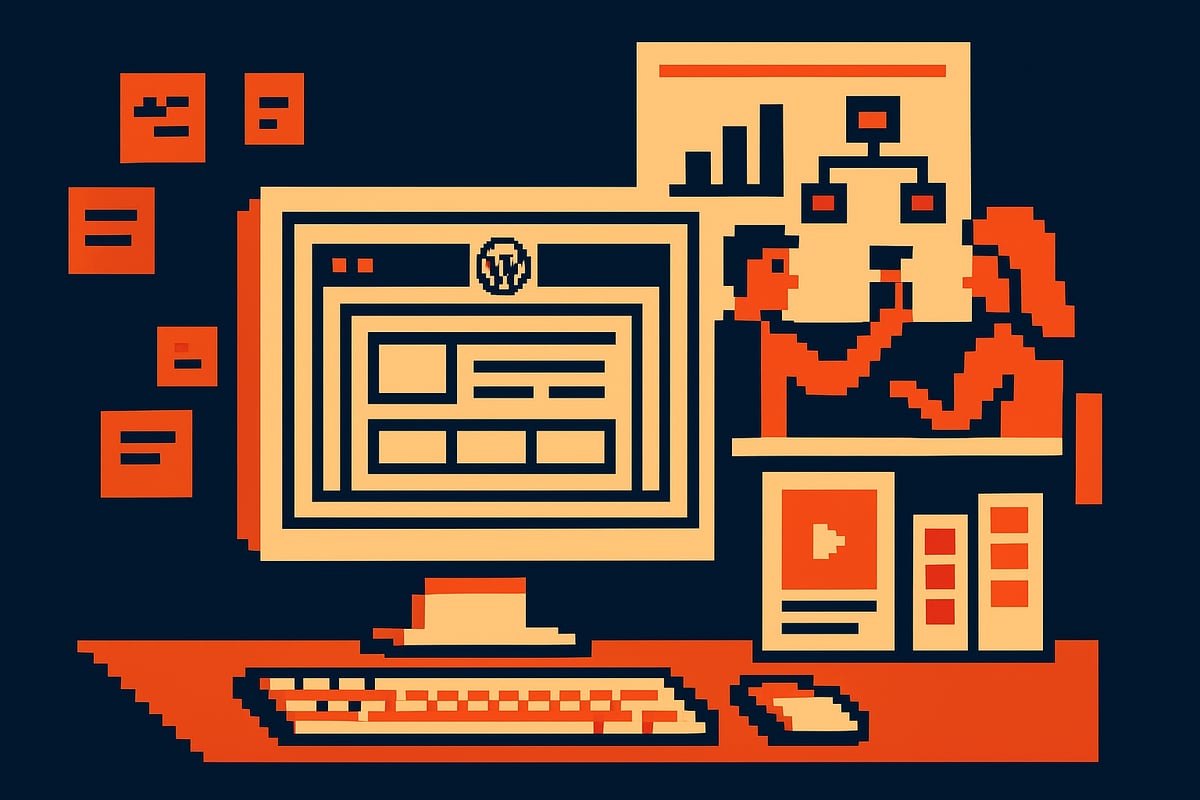
The first step in creating a wordpress website is to define its core purpose. Is your site promoting a business, sharing expert insights through a blog, showcasing a creative portfolio, or selling products via e-commerce? Clear objectives shape every design and content decision.
Identify your target audience and consider their needs and preferences. Are they local customers, global clients, or a specific professional community? Understanding your users helps tailor both content and functionality.
Set measurable goals for your wordpress website, such as increasing monthly visitors, generating leads, or boosting online sales. Use competitor analysis to benchmark your ambitions. Study leading sites in your sector, noting features like navigation, content clarity, and calls to action. For example, NHS and Fresko Foods structure their sites around clear user journeys, providing valuable inspiration.
WordPress remains the platform of choice for many, powering over 43% of all websites worldwide according to recent WordPress powers over 43% of all websites statistics. Analysing top performers can help you set realistic and aspirational targets for your own site.
With your vision defined, begin mapping out the structure of your wordpress website. List the essential pages your users expect to find: Home, About, Services, Blog, Contact, and, for e-commerce, a Shop page.
Plan navigation to ensure a seamless user journey. Menus should be simple and intuitive, guiding visitors to key information with minimal clicks. Create a content outline for each main page, identifying the primary message, calls to action, and supporting visuals.
In 2026, AI-powered tools can support your content ideation process, offering suggestions for topics, headlines, or even full sections based on your objectives. Well-structured wordpress websites see higher engagement and lower bounce rates, as users find relevant information quickly.
Consider the flow between pages. Internal linking not only improves user experience but also supports SEO. Map out how your site’s sections connect to encourage longer visits and higher conversions.
Gather all brand assets before you start building your wordpress website. This includes your logo, high-resolution images, brand colours, and font files. Consistency in these elements strengthens brand recognition and trust.
Decide on your messaging and tone of voice. Will your wordpress website communicate in a formal, friendly, or expert manner? Prepare concise descriptions of your products or services, ensuring all information is accurate and up to date.
Accessibility and mobile-first design are critical in 2026. Ensure your visuals are clear, text is legible, and navigation works well on every device. Over 70% of web traffic comes from mobile users, making responsive layouts and fast-loading pages a non-negotiable priority.
Finally, review your requirements for features such as contact forms, booking systems, or e-commerce capabilities. Documenting these needs early streamlines the design and development process, preventing costly revisions later.
A successful wordpress website starts with the right domain and reliable hosting. Making strategic choices at this stage forms the foundation for your site’s branding, performance, and long-term growth. Let’s explore how to secure a memorable domain and select hosting that matches your ambitions.

Your domain name is the digital address of your wordpress website. It should be easy to remember, relevant to your brand, and optimised for search engines. Keep it concise, avoid numbers and hyphens, and use keywords where natural.
Top tips for choosing a domain:
Research your competitors’ domains for inspiration and to avoid confusion. A well-chosen domain establishes credibility and helps your wordpress website stand out.
The hosting provider you choose impacts your wordpress website’s speed, security, and scalability. There are several hosting types available:
| Hosting Type | Pros | Cons |
|---|---|---|
| Shared | Affordable, easy to set up | Limited resources |
| Managed | Automatic updates, expert support | Higher cost |
| VPS | Dedicated resources, flexible | Requires management |
| Cloud | Scalable, high uptime, fast | Can be complex |
Managed WordPress hosting is a popular choice in 2026, offering features like daily backups, automatic updates, and expert support. According to recent data, managed hosting can reduce downtime by 40 percent compared to shared hosting, making it ideal for growing sites.
When evaluating providers, compare speed, uptime guarantees, security features, and scalability. Choose a package that supports your projected traffic and the needs of your wordpress website.
Once you have your domain and hosting, connect your domain to your hosting account. This typically involves updating DNS settings with your registrar to point to your hosting provider’s servers.
Essential setup steps:
Most modern hosts simplify this process with guided setup wizards. If you encounter issues, consult your provider’s support or knowledge base. With your domain and hosting configured, your wordpress website is ready for the next stage—installation and initial setup.
Setting up your wordpress website begins with a smooth installation and thoughtful configuration. In 2026, the process is more accessible than ever, allowing anyone to launch a secure, high-performing site with minimal technical knowledge.
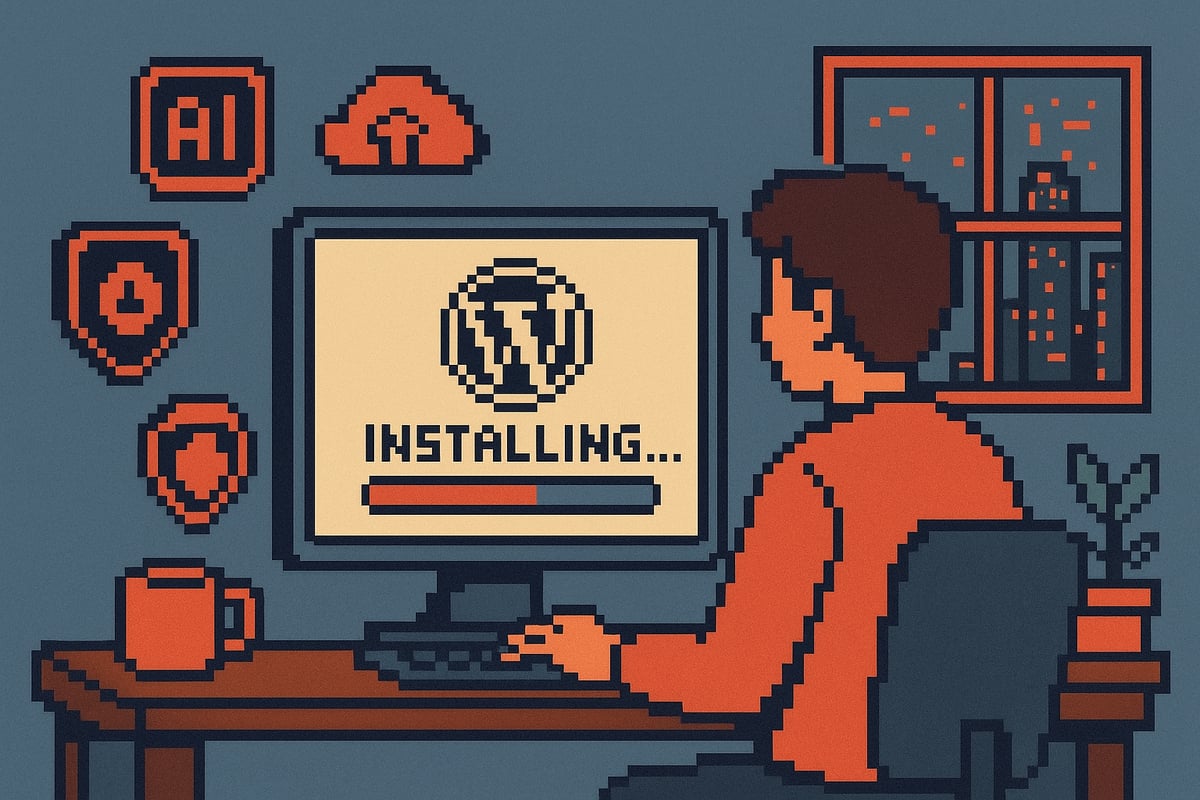
There are multiple ways to install WordPress in 2026, making it easier to get your wordpress website online quickly. The most common methods include:
When installing your wordpress website, watch for common pitfalls. Double-check your hosting environment meets the latest PHP and MySQL requirements. If you encounter issues, consult your hosting provider’s support or the official WordPress forums for troubleshooting.
After installation, configuring your wordpress website ensures it is ready for visitors and search engines. Start by setting your site title and tagline to reflect your brand identity. Adjust the timezone to match your location, which helps with scheduled posts and analytics accuracy.
Next, configure your permalinks for SEO. Go to Settings > Permalinks and choose a structure like /post-name/ for clean, readable URLs. Add essential users and assign appropriate roles, such as Administrator, Editor, or Contributor, to control access.
Enable automatic updates for plugins, themes, and WordPress core. This keeps your wordpress website secure and minimises maintenance tasks in the future.
Protecting your wordpress website is vital from day one. Begin by ensuring your SSL certificate is active, so your site runs on HTTPS. This not only secures data but also improves your Google ranking.
Choose strong passwords for all user accounts and enable two-factor authentication (2FA) to guard against unauthorised access. Configure your privacy policy and cookie consent banners to comply with GDPR and other privacy regulations.
For a comprehensive approach, follow practical steps outlined in this WordPress website security guide. These measures help safeguard your data, build user trust, and ensure your wordpress website meets legal requirements.
Selecting the right theme and plugins is crucial to building a professional wordpress website that stands out in 2026. Modern themes and plugins not only enhance your site's appearance but also boost performance, security, and user experience.
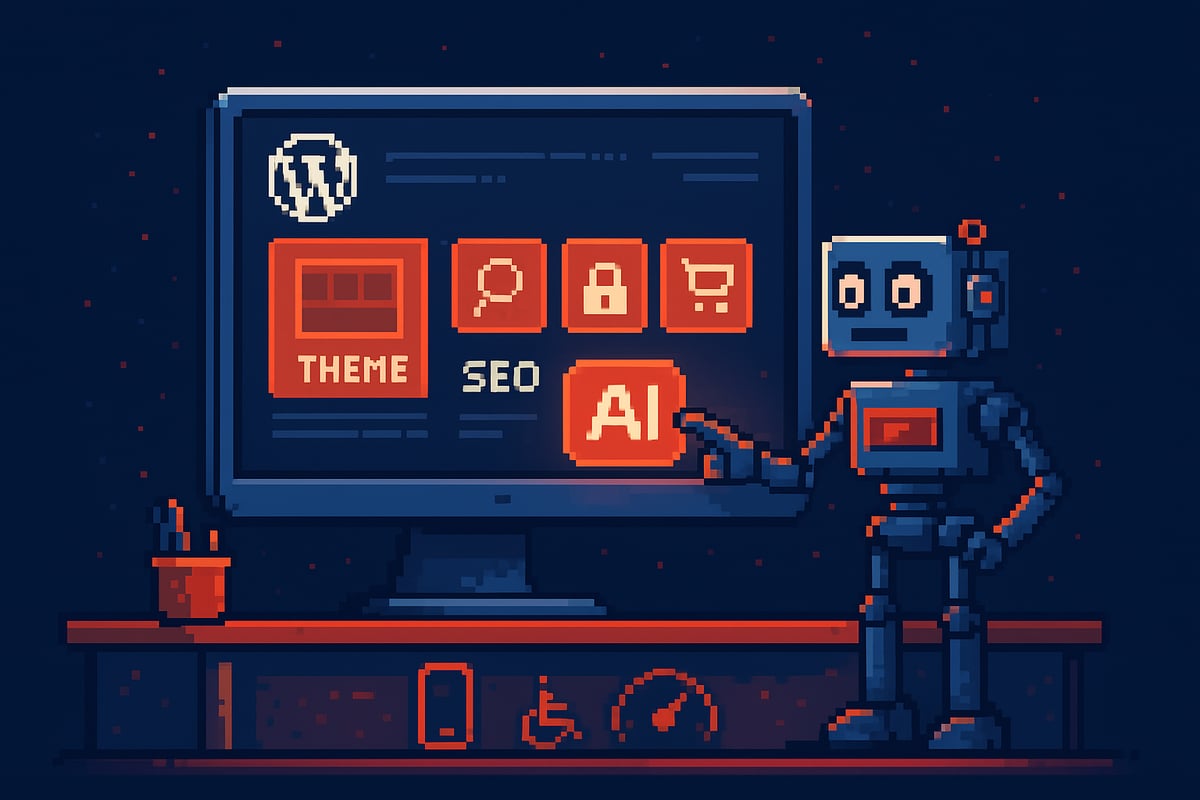
The theme you choose forms the foundation of your wordpress website’s look, feel, and usability. In 2026, both free and premium themes offer impressive options, but the best choice depends on your budget, technical needs, and branding goals.
| Feature | Free Themes | Premium Themes |
|---|---|---|
| Cost | £0 | £30–£100+ |
| Support | Community | Professional |
| Updates | Regular | Priority/Frequent |
| Customisation | Limited | Extensive |
| Unique Design | Common | Exclusive/Unique |
A responsive, mobile-optimised theme is now non-negotiable, as mobile users dominate web traffic. Accessibility and site speed are equally vital for a successful wordpress website. In 2026, AI-generated theme customisation is a standout trend, letting you personalise layouts, colours, and features with intuitive tools. Leading themes like Astra and GeneratePress remain popular for their flexibility and performance.
If you want a fully bespoke design or advanced features, consider professional WordPress web design services. These services provide tailored solutions that align precisely with your brand and user needs.
Once you have selected a theme for your wordpress website, installation is straightforward via the WordPress dashboard. Go to Appearance, click Themes, select Add New, and search for your chosen theme. After installation, activate it with one click.
Customising your theme is where your brand comes to life. Adjust colours, fonts, and layouts to match your identity. With Full Site Editing and block patterns in WordPress 6.x and beyond, you can design headers, footers, and content areas visually, without coding. AI-powered customisation tools in 2026 further simplify the process, suggesting design improvements based on your content and goals.
Always preview your wordpress website on multiple devices to ensure a consistent, engaging experience for all users. Test navigation, imagery, and interactive elements for smooth performance across desktops, tablets, and mobiles.
The right plugins transform a basic wordpress website into a powerful, feature-rich platform. For 2026, several plugin categories are considered essential:
Sites with a carefully selected plugin set load up to 30 percent faster and are significantly more secure. Regularly review and update plugins to maintain your wordpress website’s performance and safety.
Designing and building your wordpress website is a transformative step that brings your vision to life. A strategic approach ensures your site is not only visually appealing but also functional, accessible, and ready to convert visitors into loyal users. Let us explore the essential elements involved in this process.
Every successful wordpress website starts with a clear structure. Begin by identifying the main pages you need, such as Home, About, Services, Blog, Contact, and Shop. Each page should serve a distinct purpose and guide users towards your goals.
Plan your navigation carefully. A simple, intuitive menu helps visitors find information quickly. Consider the user journey: how will someone move from your Home page to making a purchase or contacting you? Use logical groupings and avoid clutter.
Create a sitemap or a flowchart to visualise your website’s structure. This step ensures you do not miss any key sections. For multi-location businesses or organisations with distinct departments, consider using WordPress multisite networks for scalability.
A well-organised wordpress website keeps bounce rates low and engagement high. Test your navigation with real users to ensure it is intuitive. Adjust menus and page hierarchies based on feedback and analytics. Always end this phase with a review of your site map and menus to ensure clarity.
Content is the heart of your wordpress website. Start with engaging headlines that capture attention and clearly communicate value. Write concise, action-oriented copy for each section, using calls-to-action to guide users.
Incorporate diverse media such as images, videos, and infographics. These elements break up text and make your site more engaging. Optimise all media for fast loading and accessibility by using descriptive alt text and captions.
Leverage AI-powered writing assistants to generate ideas, draft copy, or even translate content. In 2026, tools like 10Web’s AI integration in WordPress allow you to create and refine content rapidly without leaving your dashboard. This accelerates the development of a professional wordpress website, even if you have limited writing experience.
Format content for readability. Use short paragraphs, bullet points, and clear headings. Ensure your tone matches your brand and resonates with your target audience. Consistently review and update content to keep your wordpress website relevant and authoritative.
Modern wordpress website design thrives on flexibility and personalisation. Take advantage of WordPress patterns for rapid page creation. Patterns are pre-designed layouts for sections like testimonials, galleries, or calls-to-action, which you can insert and customise with ease.
Add widgets to enrich your site’s functionality. Popular widgets include social media feeds, customer testimonials, interactive maps, and newsletter sign-up forms. Place widgets thoughtfully in sidebars, footers, or dedicated sections to support your site’s goals.
Customise your headers, footers, and sidebars to reflect your brand identity. Adjust colours, fonts, and spacing to ensure a cohesive look. Use Full Site Editing and block patterns introduced in recent WordPress versions to create unique layouts tailored to your needs.
Preview your wordpress website regularly during this phase. Test different widget combinations and patterns to enhance user experience. Gather feedback from team members or early users to refine your design before launch.
A wordpress website must perform flawlessly across all devices and browsers. With over 70% of web traffic coming from mobile in 2026, mobile-first design is critical. Use responsive themes and test layouts on smartphones, tablets, and desktops.
Check your site in multiple browsers, including Chrome, Firefox, Safari, and Edge. Fix any layout inconsistencies or interactive issues. Optimise touch interactions and ensure that all buttons and menus are easy to use on smaller screens.
Use built-in preview tools and online emulators to spot potential problems early. Address accessibility by providing clear navigation, readable text sizes, and touch-friendly elements. Regularly review analytics to identify device- or browser-specific issues on your wordpress website.
By prioritising compatibility and accessibility, you ensure every visitor has a seamless experience, no matter how they access your site.
Optimising your wordpress website is crucial for attracting visitors, performing well in search results, and keeping your site secure. In this section, you will learn practical steps to enhance your site's SEO, boost speed, and protect your investment. Let us break down each area for a comprehensive approach.
A well-optimised wordpress website can dramatically improve visibility and drive organic traffic. Start by crafting unique meta titles and descriptions for every page. This helps search engines understand your content and encourages users to click through from results.
Implement schema markup to enhance listings with rich snippets. Use SEO plugins such as Yoast or Rank Math to audit your content and receive actionable suggestions. These tools simplify technical SEO tasks, making them accessible even for beginners.
Create and submit an XML sitemap to Google Search Console and Bing Webmaster Tools. This ensures your wordpress website is indexed efficiently. Develop a strong internal linking strategy by connecting relevant pages, which improves crawlability and user experience.
For an in-depth guide, explore search engine optimisation for WordPress, which covers advanced techniques and the latest trends.
| Task | Tool/Method | Frequency |
|---|---|---|
| Meta Titles/Desc. | SEO Plugin | Each Page |
| Schema Markup | Plugin/Manual | New Content |
| XML Sitemap | SEO Plugin | Site Updates |
| Internal Linking | Manual/Plugin | Ongoing |
Regularly review your on-page SEO to keep your wordpress website competitive and discoverable.
Visitors expect your wordpress website to load quickly and respond instantly. Slow sites lose users and rank lower in search engines. Start by enabling caching, which stores copies of pages for faster delivery. Use a Content Delivery Network (CDN) to distribute your content globally, reducing latency for all visitors.
Compress images using next-generation formats like WebP or AVIF. This can significantly decrease file sizes without sacrificing quality. Minimise CSS, JavaScript, and third-party scripts to streamline loading times. Many performance plugins offer one-click solutions for these optimisations.
Speed Optimisation Table
| Optimisation | Tool/Method | Benefit |
|---|---|---|
| Caching | Plugin (e.g., WP Rocket) | Faster page loads |
| CDN | Cloudflare, BunnyCDN | Global content delivery |
| Image Compression | Smush, ShortPixel | Smaller image size |
| Minification | Autoptimize | Leaner code |
Remember, a fast wordpress website can see up to 35% higher conversion rates. Test your site speed regularly with tools like Google PageSpeed Insights and address flagged issues promptly.
Security is non-negotiable for any wordpress website. Begin by keeping WordPress core, themes, and plugins updated to patch vulnerabilities. Set up a robust firewall and malware scanner, such as Wordfence, to block threats before they cause damage.
Schedule daily backups using plugins like UpdraftPlus. This allows you to restore your wordpress website if anything goes wrong. Enforce strong passwords for all user accounts, and enable two-factor authentication (2FA) for added protection.
Configure user roles carefully. Only grant necessary permissions, and monitor login attempts for suspicious activity. Consider a managed support plan for peace of mind and professional oversight, as outlined in Complete WordPress management.
A secure wordpress website builds trust with visitors and safeguards your data from potential breaches.
Making your wordpress website accessible and compliant is essential for legal, ethical, and commercial reasons. Follow WCAG 2.2 guidelines to ensure everyone can use your site, regardless of ability. Add descriptive alt text to images, use ARIA labels for navigation, and ensure all features work via keyboard.
Review your colour contrast and font choices to guarantee readability. Implement a GDPR-compliant cookie consent tool, and publish an up-to-date privacy policy. These steps protect your users and reduce your legal risk.
Accessibility & Compliance Checklist
With over 70% of web traffic coming from mobile devices, test your wordpress website on various screen sizes and browsers. Ensuring accessibility and compliance not only meets requirements but also expands your audience and enhances reputation.
Launching your wordpress website is a significant milestone, but ensuring long-term success requires careful preparation, thorough testing, and consistent maintenance. This final step will help you deliver a seamless experience for your visitors from day one and enable continued growth.
Before going live, a rigorous pre-launch checklist helps guarantee your wordpress website is ready for visitors. Methodically work through these steps:
A comprehensive review helps you catch minor issues that could otherwise affect user trust or SEO performance. Investing time in this stage leads to a more polished and effective wordpress website.
Once your wordpress website passes all checks, it is time to launch confidently. Start by disabling any ‘Coming Soon’ or maintenance plugins to make your site publicly accessible.
Announce your launch through email campaigns, social media posts, and press releases to generate initial traffic and engagement. Real-time analytics tools can help you monitor visitor behaviour and spot any early issues.
If you are using the latest innovations, such as the WordPress.com launches free AI website builder, you can streamline both the build and launch process with AI-driven setup and support. This ensures your launch is smooth and efficient, even for those new to website management.
Maintaining your wordpress website is vital for security, performance, and relevance. Schedule regular backups and keep WordPress core, themes, and plugins up to date to protect against vulnerabilities.
Monitor your site for suspicious activity or downtime using automated alerts. Evaluate performance metrics to identify slow-loading pages or broken elements. Continually add new content and features to keep your audience engaged.
For peace of mind, consider a managed support plan that covers technical updates and troubleshooting, allowing you to focus on your core business while experts handle the technical details of your wordpress website.
After launch, measure your wordpress website’s performance using key performance indicators (KPIs). Common KPIs include:
| KPI | What to Track | Why It Matters |
|---|---|---|
| Traffic | Visitors, sources | Gauge reach |
| Conversions | Form fills, sales | Assess effectiveness |
| Bounce Rate | % leaving after 1 page | Identify engagement |
| Page Speed | Load times | Enhance user experience |
Analyse these metrics with Google Analytics or similar tools. Use insights to A/B test headlines, calls-to-action, and layouts. Listen to user feedback and adapt to new trends to ensure your wordpress website remains competitive and continues to grow.
Whether you’re just starting out or ready to take your WordPress site to the next level, having expert support can make all the difference. We’ve covered everything from planning and design through to SEO and ongoing updates, but sometimes it’s helpful to have a dedicated partner on your side. At Pixelish, we specialise in crafting custom WordPress websites that not only look impressive but truly drive results for businesses in Doncaster and South Yorkshire. If you’d like to discuss how we can help you build a website that converts visitors into loyal customers, Get in touch today.


© Copyright 2025, All Rights Reserved by Pixelish