
No products in the basket.
Website Design Website Development Guide for 2026 Success
Master website design website development for 2026 with expert strategies…

In 2026, standing out online demands more than a good idea. A top-performing web design team is the engine behind every successful digital experience.
The digital landscape changes faster than ever, bringing new challenges and raising the bar for web design team excellence. Whether you lead an agency, manage projects, or build in-house teams, mastering the structure and workflow of your web design team is essential for lasting success.
This guide delivers proven strategies and a future-focused approach to help your web design team thrive. Explore the latest team structures, recruitment tactics, workflow optimisation, technology adoption, and collaboration methods.
Ready to future-proof your web design team? Discover actionable steps and expert insights to drive results in a rapidly evolving digital world.
The web design team of 2026 looks very different from just a few years ago. Rapid digital transformation, changing client needs, and powerful new tools are reshaping how teams are built, led, and organised.

In 2026, the web design team is increasingly defined by specialists who blend traditional roles. Hybrid designers now combine UI and UX expertise, often with a strong focus on accessibility. Agencies are hiring AI and automation specialists to streamline design processes and boost innovation.
Cross-functional collaboration is essential. Teams that blend skills deliver projects 30% faster, while 65% now include a dedicated UX researcher (UX Collective 2025). For a deeper dive into how these roles are structured and the impact on project delivery, see Design Team Structures and Roles.
The web design team benefits from this hybrid approach by quickly adapting to client needs and new technologies.
The structure of a web design team is now more flexible than ever. Remote and hybrid models dominate, with 72% of teams operating outside a traditional office (Upwork 2025). This shift brings both advantages and challenges.
| Model | Pros | Cons |
|---|---|---|
| Remote | Wider talent pool | Communication hurdles |
| In-House | Easier collaboration | Limited flexibility |
| Hybrid | Best of both worlds | Managing consistency |
A web design team working remotely can access global talent, but must invest in strong communication tools and processes to maintain productivity and cohesion.
Agile methodologies are now the norm for the modern web design team. Many agencies have adopted squad-based or pod-based structures, encouraging smaller, focused groups to work independently yet collaboratively.
These agile pods deliver results quickly and efficiently. One digital agency reported a 40% increase in throughput after restructuring their web design team into agile pods, leading to faster client turnaround and higher satisfaction.
Leadership within a web design team is evolving. Product owners and design ops managers are now central to team success. They ensure smooth project flow and keep innovation at the forefront.
Technical leads and QA specialists play an increasing role, overseeing code quality and user experience. Project managers must juggle a broader range of responsibilities, from resource allocation to stakeholder management, supporting every web design team member.
Diverse perspectives drive innovation in any web design team. Teams that prioritise inclusion are more creative and effective. Inclusive hiring practices, such as unbiased job descriptions and diverse interview panels, help build a stronger team culture.
Emphasising diversity not only improves output but also creates a more resilient web design team, ready to tackle the challenges of a rapidly changing digital world.
Attracting and retaining top talent is a central challenge for any web design team in 2026. A competitive digital marketplace means agencies and organisations must stand out to secure the best designers, developers, and strategists. Understanding what motivates candidates and how to showcase your team’s strengths is essential.

To attract high-calibre professionals, every web design team needs a strong employer brand. Highlighting your team’s culture, values, and project impact on social media and design communities increases visibility. According to LinkedIn, there has been a 50% rise in design job postings that offer remote options, demonstrating the importance of flexibility.
Strategies to attract talent include:
A compelling employer brand helps your web design team appeal to candidates who value innovation and professional development.
Efficiency in recruitment gives your web design team a competitive edge. Skills assessments and portfolio reviews remain crucial, but AI-driven tools are reshaping candidate screening. Automating initial assessments can reduce time-to-hire by up to 40%, as reported by Glassdoor in 2025.
For a deeper dive into leveraging technology, explore AI-Powered Recruiting Strategies. These solutions not only speed up hiring but also help reduce unconscious bias.
By integrating automation and data-driven insights, your web design team can focus on engaging the most promising candidates.
Effective onboarding accelerates how quickly new hires contribute to your web design team. Structured programmes, whether for remote or in-house staff, provide clarity on roles, expectations, and workflows. Early mentorship and buddy systems offer support during the transition, fostering rapid integration.
Agencies with formal onboarding processes achieve 25% higher first-year retention rates. This investment ensures new team members feel valued and equipped to succeed.
Long-term success for a web design team relies on keeping talent engaged and motivated. Clear career progression, upskilling opportunities, and regular recognition are key drivers of retention. Teams with defined progression paths experience 33% lower turnover, according to SHRM 2025.
Best practices include:
Prioritising development and recognition helps your web design team maintain a high level of engagement and loyalty.
Sustaining productivity means your web design team must guard against burnout. Flexible work policies, mental health resources, and realistic project pacing are essential. Monitoring workloads and encouraging open dialogue about wellbeing creates a supportive environment.
By fostering balance, your web design team can deliver consistent results while maintaining morale and creativity.
Optimising your web design team’s workflow is essential for delivering quality projects on time and exceeding client expectations. In 2026, efficiency and adaptability are more important than ever. Let’s break down proven strategies to streamline project management, boost productivity, and foster seamless teamwork.
Agile and Lean methodologies have become the backbone of effective web design team operations. Scrum, Kanban, and Lean empower teams to deliver faster, collaborate better, and reduce bottlenecks. For example, agencies adopting Kanban reported 20 percent faster project launches.
Here’s a quick comparison:
| Method | Key Feature | Ideal For |
|---|---|---|
| Scrum | Sprints & roles | Iterative web projects |
| Kanban | Visual workflow, WIP limits | Continuous delivery |
| Lean | Eliminate waste, optimise | Efficiency-focused teams |
By embracing Agile, your web design team can respond swiftly to changes and keep stakeholders aligned.
Smooth communication is critical for any web design team. Integrating project management tools like Asana, Jira, or Trello helps centralise tasks, track progress, and minimise confusion. For documentation, platforms such as Confluence, Notion, or Git ensure version control and easy access to resources.
Teams using integrated PM tools report 50 percent fewer missed deadlines, according to Atlassian 2025. Implementing structured documentation enables your web design team to work transparently and consistently, no matter the project scale.
Automation is transforming how a web design team tackles routine tasks. Tools like Figma plugins, automated prototyping, and CI/CD pipelines streamline processes from design to deployment.
For example, automated QA can reduce manual testing time by 60 percent. Consider this basic workflow:
if task in repetitive_tasks:
    automate(task)
Automating repetitive work frees up your web design team for creative and strategic tasks.
Embedding quality assurance (QA) early in the process ensures your web design team delivers reliable results. Regular retrospectives and feedback loops enable teams to learn and adapt.
Continuous QA can lead to a 35 percent reduction in post-launch bugs, according to Smashing Magazine 2025. Use metrics to monitor performance, and encourage your web design team to iterate based on user feedback and project outcomes.
Collaborating with marketing, development, and content teams is vital for holistic web projects. Strategies for seamless handoffs include:
This approach ensures your web design team is aligned with broader business goals and delivers cohesive solutions.
Efficient resource allocation helps your web design team avoid burnout and maintain quality. Use forecasting tools and resource management software to balance workloads and plan capacity.
By regularly reviewing team capacity, you can assign projects based on strengths and ensure your web design team remains productive and motivated.
A prime example comes from Pixelish, a Doncaster-based agency that has perfected workflow optimisation for their web design team. Through tailored processes, agile sprints, and ongoing support, they have achieved 98 percent client retention and generated over £2.1M in client revenue in 2024.
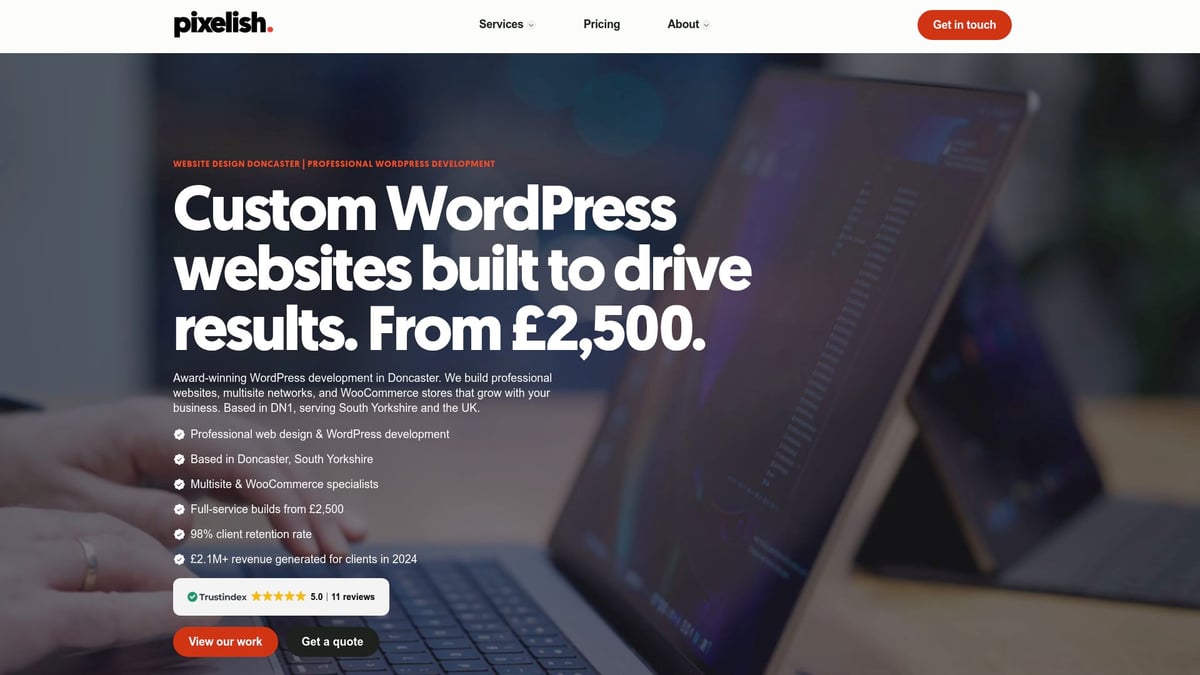
Their web design team integrates custom WordPress solutions, WooCommerce, and SEO best practices, demonstrating that a structured yet flexible workflow leads to measurable business results.
The pace of change in digital design is relentless. For a web design team to thrive in 2026, adopting new technologies and tools is essential. Embracing emerging solutions not only boosts efficiency but also ensures your team delivers innovative, accessible, and high-performing websites.

Artificial intelligence and automation have become integral to web design team workflows. AI-powered prototyping, automated user testing, and smart content generation streamline early design phases. For instance, using AI-driven wireframing tools, teams report cutting design time by up to 40 percent. Automation also extends to repetitive tasks such as asset exporting and style guide creation, freeing designers to focus on creativity. As AI continues to evolve, every web design team should regularly evaluate new solutions to stay ahead in the industry.
Modern design platforms like Figma, Adobe XD, Webflow, and Framer are now the backbone of any web design team. These tools enable real-time collaboration, version control, and seamless handoffs between designers and developers. According to Figma, 60 percent of teams standardise on their platform for cross-functional work. Table summarising tool features:
| Tool | Collaboration | Prototyping | Developer Handoff |
|---|---|---|---|
| Figma | Yes | Yes | Yes |
| Adobe XD | Yes | Yes | Yes |
| Webflow | Yes | Limited | Yes |
| Framer | Yes | Yes | Yes |
Selecting the right stack is crucial for maximising productivity across your web design team.
Consistency and speed are vital for a web design team handling multiple projects. Design systems and component libraries ensure brand coherence and reduce duplicated effort. Large brands report a 50 percent drop in design inconsistencies after adopting shared libraries. Component-driven workflows also make it easier for teams to scale designs, maintain documentation, and onboard new members efficiently. Investing in a robust design system empowers your web design team to deliver high-quality results at scale.
Accessibility is more than a compliance requirement—it is a driver of innovation for any web design team. Automated tools like axe and WAVE help teams identify and resolve accessibility issues early in the design process. Integrating these solutions has led to a 30 percent increase in accessibility compliance for many agencies. For a user-centred approach, frameworks such as the Inclusive Web Accessibility Framework offer advanced strategies that prioritise customisation and user autonomy, ensuring your web design team creates truly inclusive experiences.
Website speed and user experience are critical benchmarks for a web design team in 2026. Monitoring Core Web Vitals—such as loading speed, interactivity, and visual stability—is vital for retaining users. Google reports that 53 percent of users abandon sites that take longer than three seconds to load. Teams now rely on integrated tools for ongoing performance audits, rapid bug fixes, and optimisation. Prioritising performance ensures your web design team consistently meets modern user expectations.
The digital landscape is always shifting, so a web design team must invest in continuous learning. Encourage certifications, workshops, and experimentation with technologies like AR, VR, and voice interfaces. Allocating dedicated time to skill development keeps your web design team adaptable, engaged, and ready to tackle the challenges of tomorrow.
Establishing a thriving web design team requires deliberate effort to foster collaboration, spark creativity, and build a positive culture. In 2026, these elements are more crucial than ever as teams navigate remote work, rapid innovation, and diverse perspectives.
A web design team thrives when open communication is prioritised. Regular check-ins, transparent project updates, and accessible channels ensure everyone feels heard. Psychological safety is essential, allowing team members to share ideas without fear of criticism.
Encouraging cross-functional collaboration with stakeholders, developers, and content creators leads to more holistic solutions. To see collaborative methods in action, consider how web designers and collaboration drive project success through structured teamwork and shared expertise.
Creativity is the heartbeat of every web design team. Scheduled brainstorming sessions, design jams, and monthly hackathons provide opportunities to explore fresh ideas.
Teams that dedicate time to innovation sprints report a 20% increase in creative solutions. By rotating leadership roles during these sessions, each member gains ownership and confidence. Fostering an environment where experimentation is valued ensures that no idea is dismissed prematurely, propelling the web design team forward.
Effective feedback is a cornerstone of a high-performing web design team. Implementing structured design reviews, user testing, and peer critique sessions creates a culture of continuous improvement.
Balancing positive reinforcement with actionable suggestions helps team members grow without feeling demotivated. Feedback should be timely, specific, and focused on both process and outcome. Embedding user insights into the feedback cycle ensures the web design team remains user-centric and adaptable.
Recognition programmes play a vital role in motivating a web design team. Celebrating milestones, project launches, and individual achievements fosters a sense of belonging.
Post-mortems after project setbacks provide valuable lessons, transforming failures into future strengths. Incorporating insights from employee retention strategies 2025 can help establish effective recognition systems that boost morale and retention.
Engaging a web design team across remote and hybrid setups requires creativity. Virtual team-building activities, online social hours, and collaborative platforms like Slack, Gather, and Miro help bridge physical distances.
Regular virtual check-ins and informal chats keep relationships strong. A dedicated channel for sharing wins and challenges ensures the web design team remains connected and aligned, regardless of location.
| Engagement Tool | In-Person Teams | Remote Teams |
|---|---|---|
| Social Hours | ✓ | ✓ |
| Brainstorming | ✓ | ✓ |
| Virtual Games | ✓ |
A web design team benefits from a culture where every background and perspective is valued. Inclusive hiring practices and ongoing diversity training create an environment where all voices contribute to creative outcomes.
Research shows that diverse teams outperform their peers by 35% in creative output. By embracing equity and inclusion, a web design team unlocks innovation and drives lasting success.
Staying ahead in the digital sector means ensuring your web design team is ready for tomorrow's demands. Future-proofing is not just about adopting new tools, but also about building a resilient, adaptive culture.
To keep your web design team ahead, monitor emerging technologies such as AI, AR/VR, and headless CMS solutions. Stay alert to shifts in user behaviour and evolving expectations, as these can quickly change what clients need and value.
Analyse competitors and attend industry conferences to spot patterns early. Encourage your team to explore new tools and methodologies, making trend awareness a part of your regular workflow.
Continuous learning is essential for a future-ready web design team. Allocate dedicated time for certifications, online workshops, and design conferences. For example, allowing your team to spend 10 percent of their week on skill development can lead to higher rates of innovation.
Promote knowledge sharing through internal talks and lunch-and-learn sessions. This approach ensures your team remains adaptable as technology changes.
A sustainable web design team invests in its people. Identify team members with leadership potential and pair them with experienced mentors. Structured mentorship and knowledge transfer programmes help safeguard critical skills and institutional memory.
Create clear pathways for advancement so team members can see a future within your organisation. This not only boosts morale but also reduces the risk of losing top talent.
Growth brings new challenges, so a flexible approach is key. Use contract designers or freelancers during demand spikes, and consider outsourcing specific skills when needed. This strategy lets your web design team scale efficiently without compromising quality.
For agencies seeking to expand their service offerings or specialisation, the Website Design Team Services page offers insight into structuring roles for growth and adaptability.
Track the effectiveness of your web design team by monitoring delivery times, client satisfaction, and team wellbeing. Use analytics to uncover bottlenecks and areas for improvement.
Establish clear KPIs that align with your business objectives. Regularly review these metrics with your team to drive accountability and foster a shared sense of purpose.
Change is constant in web design. Equip your web design team to handle economic shifts, new technologies, and changes in the marketplace. Foster adaptability by encouraging open communication, quick feedback cycles, and a mindset that welcomes experimentation.
A resilient team will not only survive disruption but thrive in it, ensuring ongoing success for your agency or business.
As you look to build a high performing web design team for 2026, it’s clear that staying ahead means combining the right talent, agile processes, and future proof strategies. If you’re ready to put these insights into action and want a website that truly converts for your business, we’re here to help. At Pixelish, we specialise in custom web solutions and ongoing support that turns your vision into measurable results. Let’s talk about how we can help your team and your business thrive in the evolving digital landscape.
Get in touch

© Copyright 2025, All Rights Reserved by Pixelish